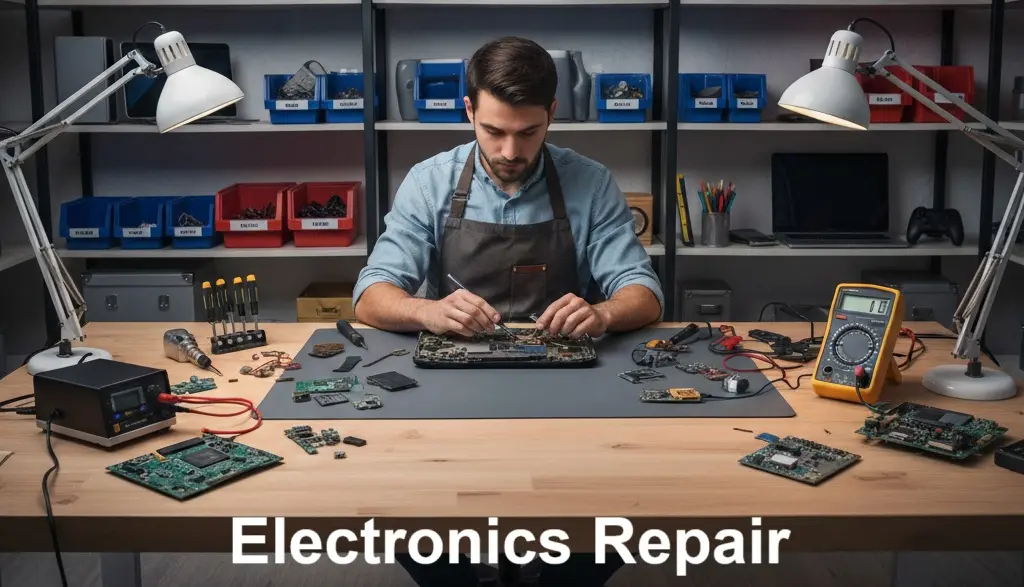
Starting your own electronics repair side business can be exciting and yes, a bit scary, but if you approach it right, it can turn into something solid worth your time. I’ve pulled together practical tips (you know, real-world stuff) to help you launch with fewer mistakes and more confidence.
Why You’re Thinking About This
Maybe you’re good with gadgets, you love taking things apart (and, okay, sometimes messing them up then fixing them), and you’re thinking: maybe I can make money doing this. That “maybe” is where the spark is, but the jump from hobby to business means you’ll want to treat it like one.
Nail Down the Basics
You’ve got the skill (or you’re building it). Now make sure the infrastructure is there. That means tools, workspace, parts inventory, and legality. You’ll want proper licenses and permit so you’re playing legit.
Choose A Clear Service Focus
You don’t have to fix every gadget under the sun, especially at first. Maybe you specialize in smartphones, maybe laptops, maybe gaming consoles. By picking a focus, you can build expertise faster. One recent article suggests that developing specialized repair skills helps you stand out.
Set Up Your Business Foundations
As a foundational step for starting a business, you’ll want to create a simple business name and brand you like. You’ll also need to track your finances from day one (income, costs, parts used). If it grows, you might even bring in a full-service accounting firm to keep things clean. You will also have to decide if you are working from home, renting a space, or having a mobile business. All have pros and cons, and some low-budget set-ups start at home.
Get Found and Build Trust
If no one knows you exist, you won’t get much business. Build a basic website or at least a Google Business Profile so people can find you. You can also show before/after repair pics on social media to help get some traction. Ask happy customers to leave reviews, and make sure your pricing and service are clear. People hate hidden fees.
Keep Learning and Stay Sharp
This industry changes fast. New devices, new parts, new challenges. You’ll want to focus on continuous training and staying up to date on trends. Also, work to build connections with suppliers and other techs so you’re not figuring everything alone.
Growing From Side Hustle to Something More
Start slow with maybe just evenings and weekends at first. Once you’re comfortable with things like workflow, pricing, and customer service, you can consider scaling. At this point, you can hire help, expand service types, or even open a store. But you’ll want to do this only when the basics are solid.
Final Thoughts
If you’re reading this and thinking, yes, I’m ready to go, awesome! If you’re thinking, not yet that’s also okay. Take the next step when you feel comfortable. Take things one good repair, one happy customer, one review at a time. You’ve got this.
How Technology Has Made Business Security Smarter and Efficient
Beyond China: Exploring New PCB Manufacturing Hubs in Asia and Middle East