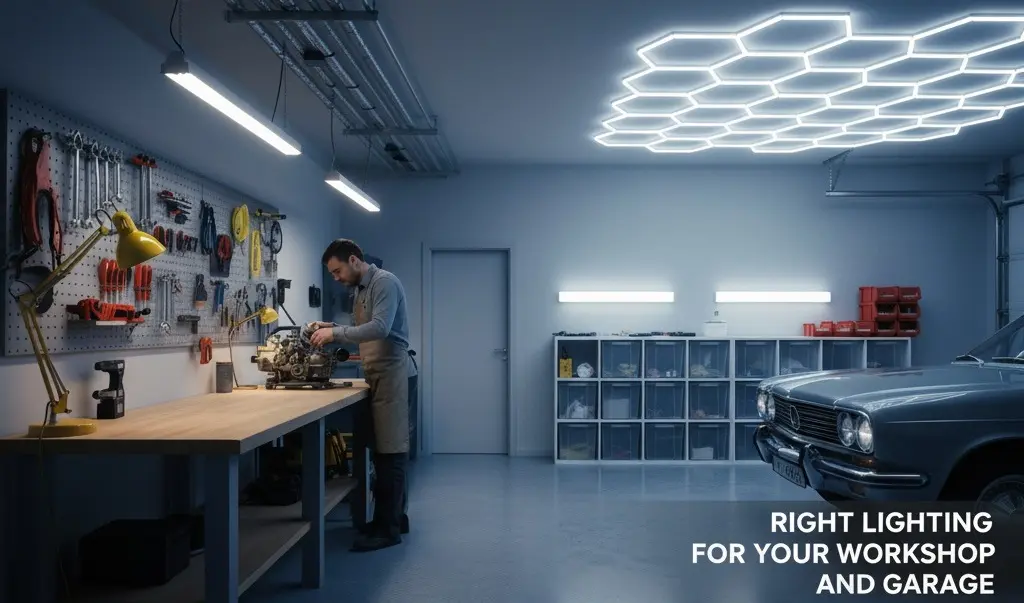
A dark workshop or garage is like a black hole for motivation. You wander in, squint at your cluttered shelves, maybe jab your toe on something sharp, then lose all ambition to finish even the smallest project. Been there, done that. Whether you’re working on a car, sharpening lawn mower blades, or sculpting your next masterpiece out of sawdust, good light is half the battle. Okay, maybe more than half.
So, what actually works? And maybe even more important how can you make your workspace bright, safe, and awesome without totally blowing your budget? Let’s talk about it.
Start Big: Overhead Lighting That Gets the Job Done
You don’t need to get fancy (unless you want to). Most workshops and garages live and die by their overhead lights. A couple of dim bulbs just don’t cut it. If your workspace looks like a scene from a moody detective show, time for a change.
Fluorescent tube fixtures are still pretty common in garages, they spread light wide, don’t cost a fortune, and last for ages. But if you’re not a fan of that blueish hum, LED strip or panel lights are where it’s at now. They’re almost always brighter, more energy efficient, and don’t flicker. Plus, LEDs don’t heat up your space like a stovetop, which is great when you’ve got your head under the hood for an hour.
Pro tip: Install more than one row if you have the space. Stagger them so you’re not standing in your own shadow all day.
Bring It in Closer: Task Lighting for the Finer Stuff
Overhead lights are great, but anyone who’s ever tried to solder a tiny wire or read a faded label knows the struggle. That’s where task lighting comes in. Clamp-on work lights, flexible lamps, or magnetic LED strips are total lifesavers. You can point them exactly where you want, and if you’ve got a bench, set up one that hovers over your work area for extra detail.
For painting, gluing, or assembling things with a gazillion screws, I always say the brighter, the better. A friend once stuck an old swing-arm desk lamp on his workbench ugly as sin, but he never complained about shadows.
Think About the Whole Space
Don’t forget the places you usually ignore the corners, under the shelves, in cabinets, and over the doorway if you’re in and out a lot. Motion sensor lights are great for those spots and stop you from fumbling for a switch with your hands full.
Color Temperature: It’s a Game Changer
Here’s something you don’t always consider: the “color” of your lights. Daylight-balanced LEDs (around 5000K) are easy on the eyes and make everything look crisp and true-to-color. This makes a huge difference for painting or any project requiring detail. The right color temperature also keeps your space from feeling like you’re working in a dungeon or a submarine.
Find Your Style and Sneak a Peek for Ideas
If you’re running low on inspiration or just want to see how other folks have set things up, do yourself a favor and scroll through some lighting design photos online.
Conclusion
The best lighting for your workshop or garage is the kind that works for you, no more, no less. Go brighter where you work, aim for daylight vibes when you can, and never underestimate a well-placed lamp or light strip. The projects (and your eyeballs) will thank you. And next time you head out to the garage, you might actually want to stay there a while.
What Do You Need to Know Before Installing a Home EV Charger?
High Speed PCB Design: Essential Wiring Techniques for Optimal Performance