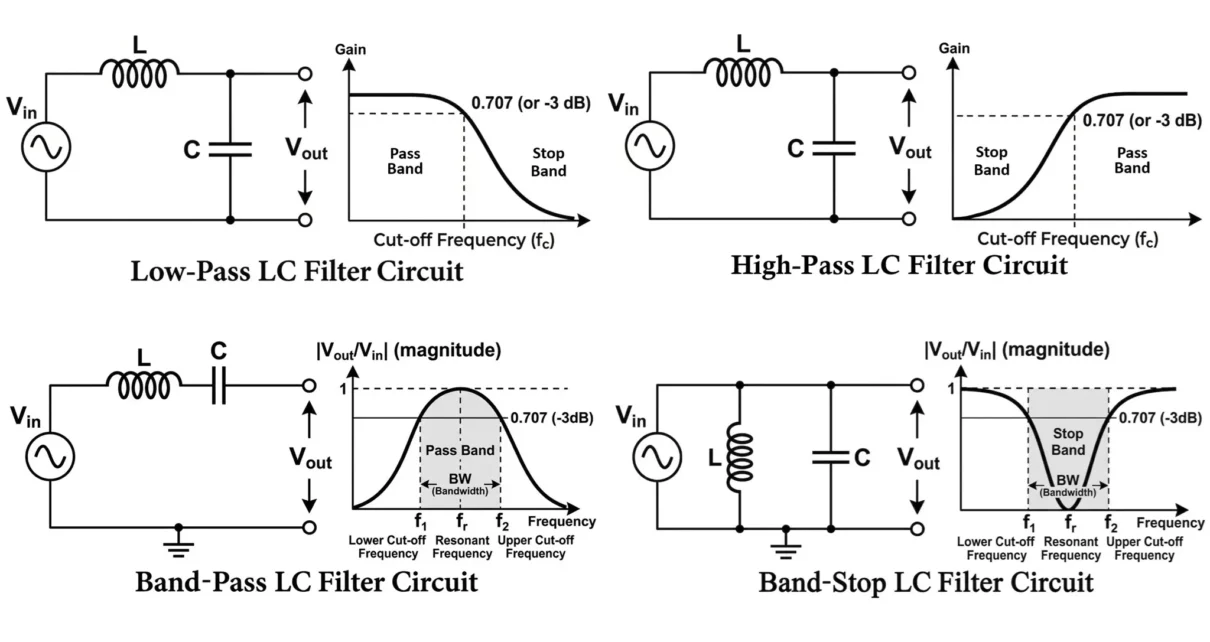
LC filters are widely used frequency-selective circuits in electronics that utilize an inductor (L) and a capacitor (C) to allow certain frequency components to pass while blocking others. Unlike RC filters, LC filters rely on the interaction between inductive reactance and capacitive reactance, making them highly effective in radio frequency (RF), power electronics, and communication […]
Electronic components
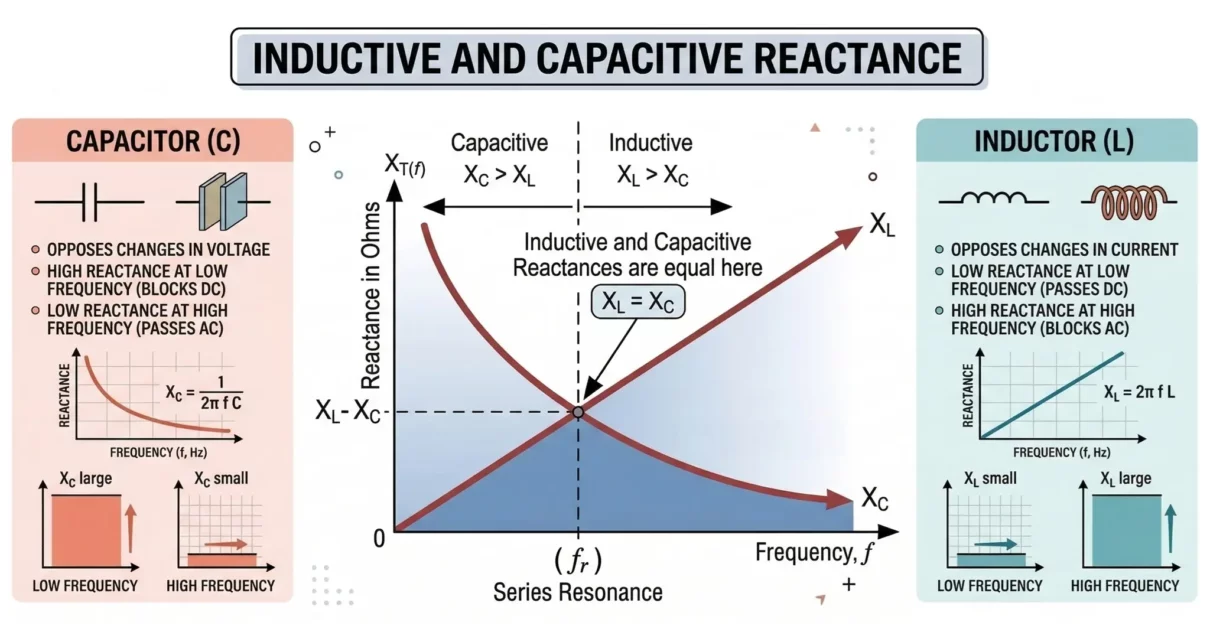
Inductive Reactance and Capacitive Reactance Explained
Understanding inductive reactance (XL) and capacitive reactance (XC) is essential for analyzing AC circuits, designing filters, oscillators, power electronics systems, and communication circuits. This article explains all fundamental concepts including resistance, reactance, impedance, frequency response, graphs, ideal and real component behavior, solved examples, advantages, disadvantages, and applications. In electronic circuits, especially those operating with alternating […]
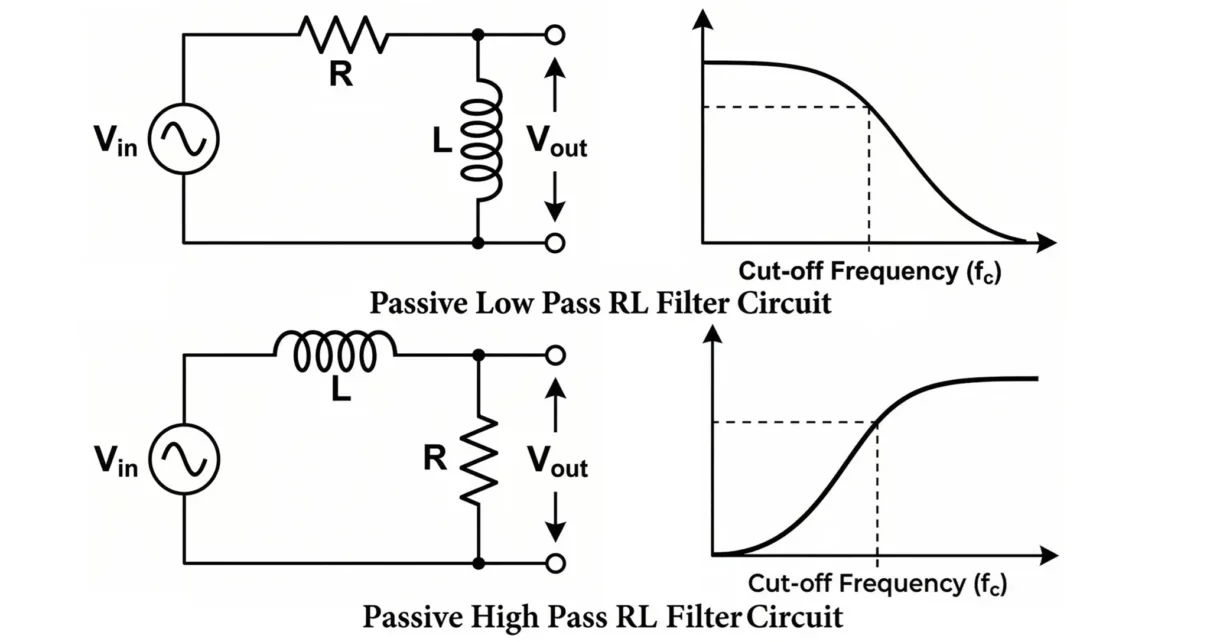
RL Filters: Circuit Diagram, Working, Types, and Applications
RL Filter Circuit is a fundamental passive filtering circuits that use a resistor (R) and an inductor (L) to control signal frequency. Like RC filters, RL filters are first-order filters, but instead of capacitive reactance, they rely on inductive reactance, which increases with frequency. Because of their simple structure and predictable frequency behavior, RL filters […]
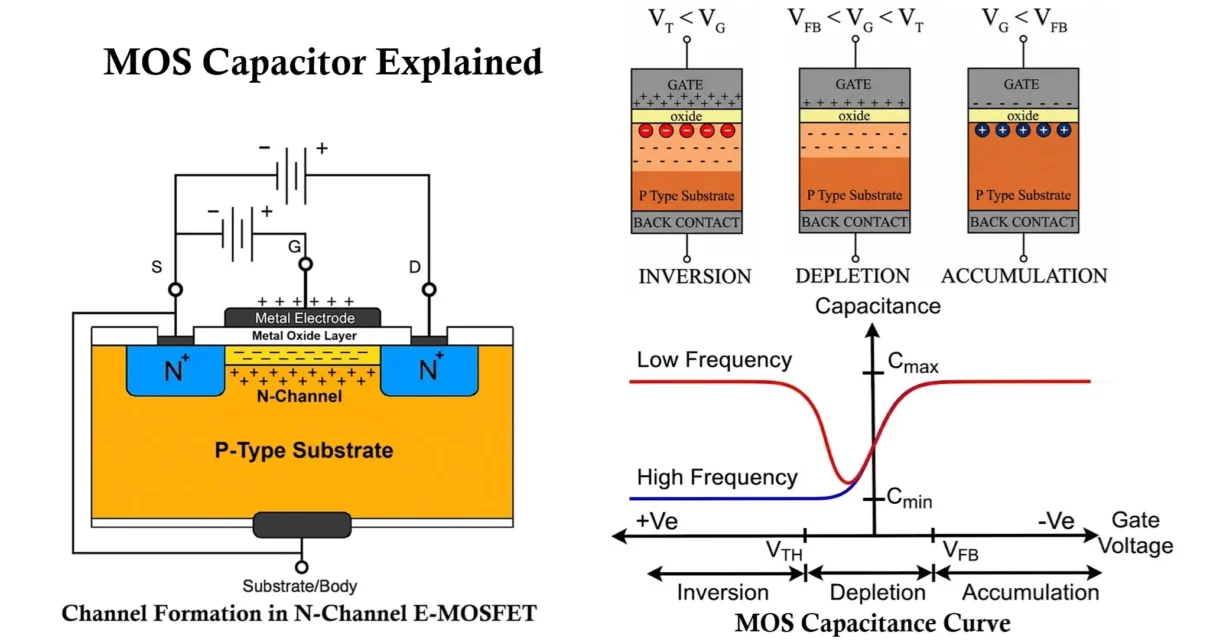
MOS Capacitor and MOS Capacitance CV Curves Explained
The MOS Capacitor (Metal Oxide Semiconductor Capacitor) is the fundamental electrostatic structure underlying modern semiconductor devices. Every MOSFET, CMOS integrated circuit, DRAM cell, Flash memory array, and nanoscale logic transistor originates from MOS capacitor physics. Understanding MOS capacitor behavior, electrostatics, energy band behavior, and Capacitance Voltage (CV) characteristics is essential for: Semiconductor device physics VLSI […]
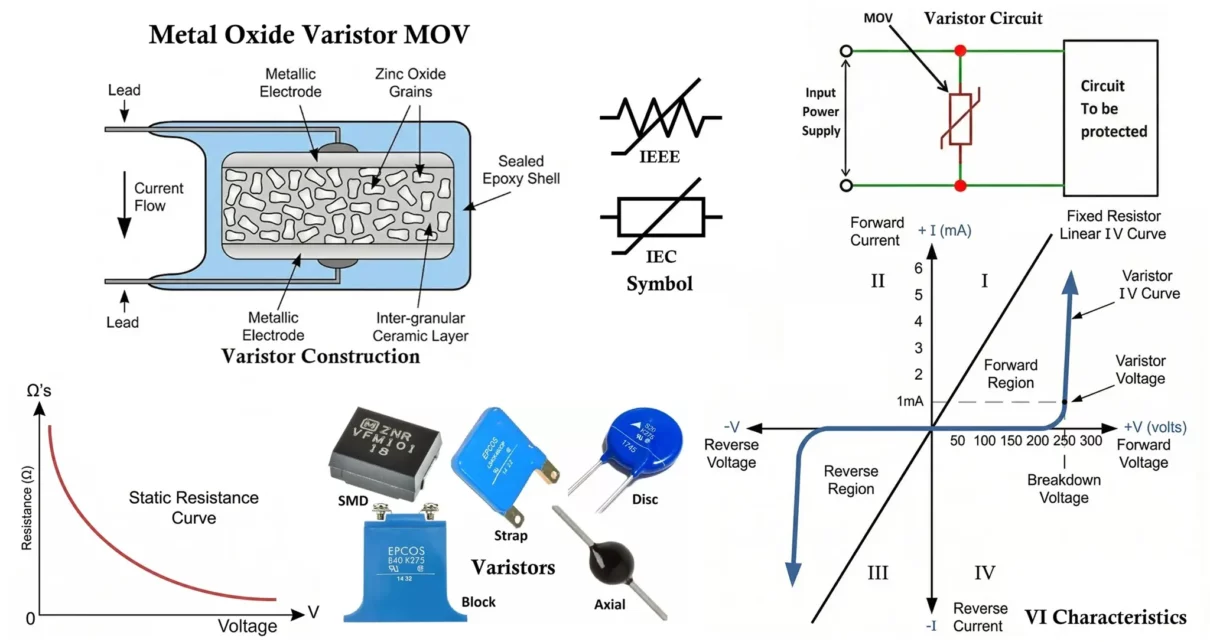
Varistor Construction, Working, Types and Applications
A Varistor is a voltage-dependent, non-linear resistor whose resistance changes significantly with applied voltage. The term varistor is derived from “variable resistor”, but unlike potentiometers or rheostats, its resistance varies automatically with voltage, not mechanically. Varistors are primarily used for over-voltage protection. Under normal operating voltage, a varistor behaves like a very high resistance device. […]
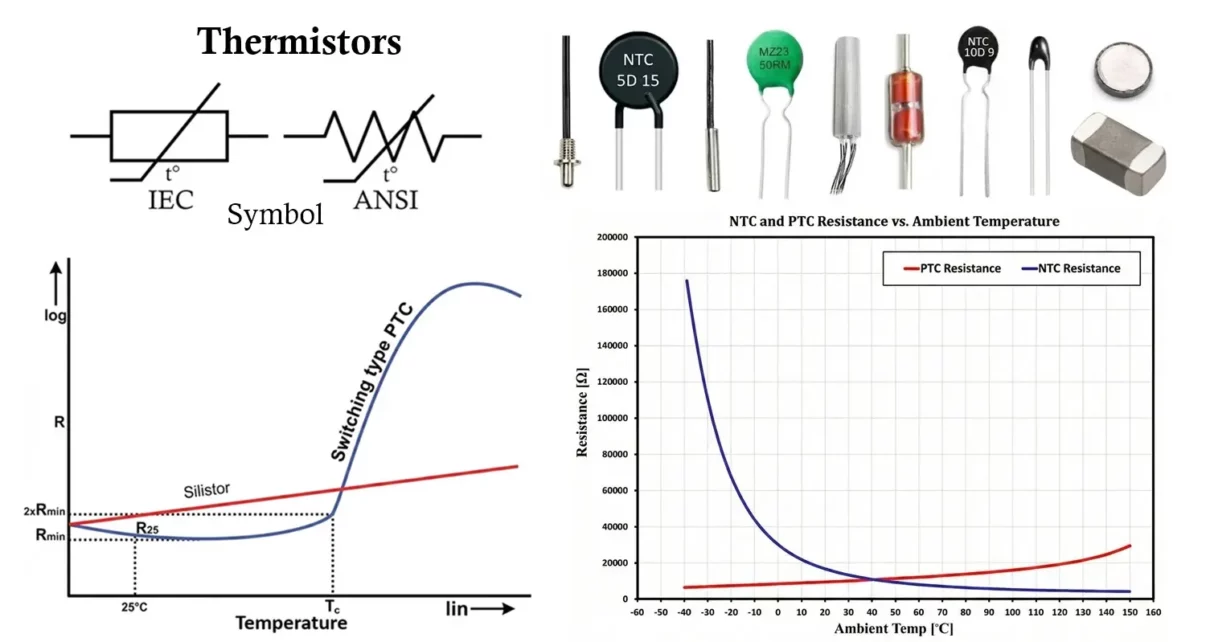
Thermistor Construction, Working, Types and Applications
A thermistor is a temperature-sensitive passive electronic component whose resistance changes significantly with temperature. The term thermistor is derived from Thermally sensitive resistor. Unlike standard resistors whose resistance remains nearly constant over temperature, thermistors are designed to exhibit large, predictable resistance variations with temperature changes. Thermistors are widely used in: Temperature measurement and control Over-temperature […]