Modern electronics have become smaller and more powerful. The ability to design compact and efficient electronic circuits has become an essential skill for both engineers and hobbyists. Space constraints, thermal performance, and signal integrity all play crucial roles in determining whether a circuit is reliable and production ready. Whether you are assembling a small DIY project or developing a sophisticated embedded system, understanding how to optimize your design from schematic to assembly will significantly improve your results.
Below are seven practical, field-tested tips for building compact and efficient electronic circuits.
1. Begin with a Clear, Well-Structured Schematic
A compact and efficient circuit always starts with a clean schematic. Define the purpose of the circuit, include only necessary electronic components, and group related functions logically. Use standardized symbols and label nets clearly to ensure readability and reduce design errors later on. A well-organized schematic becomes the foundation for an optimized PCB layout.
2. Choose the Right Components
Component selection directly affects both size and performance. Opt for compact surface-mount parts, low-power ICs, and integrated modules when possible. Review datasheets for electrical efficiency, thermal behavior, quiescent current, and recommended footprint sizes. Consulting updated component catalogs and supplier datasheets will help you identify parts that meet your performance, size, and power requirements. Follow up with the latest news about electronic components to find out which parts meet your requirements. Do not forget to consider their efficiency ratings.
3. Design a Compact and Logical PCB Layout
When moving from the schematic to the PCB, arrange components so that related parts are placed close to each other and signal paths remain short and direct. Establish a clear flow from inputs to outputs. Prioritize placement of critical components such as power regulators, microcontrollers, and high-speed interfaces before arranging supporting passives. Consider using multilayer boards to reduce routing congestion, improve grounding, and achieve a more compact footprint.
4. Assemble Components Correctly
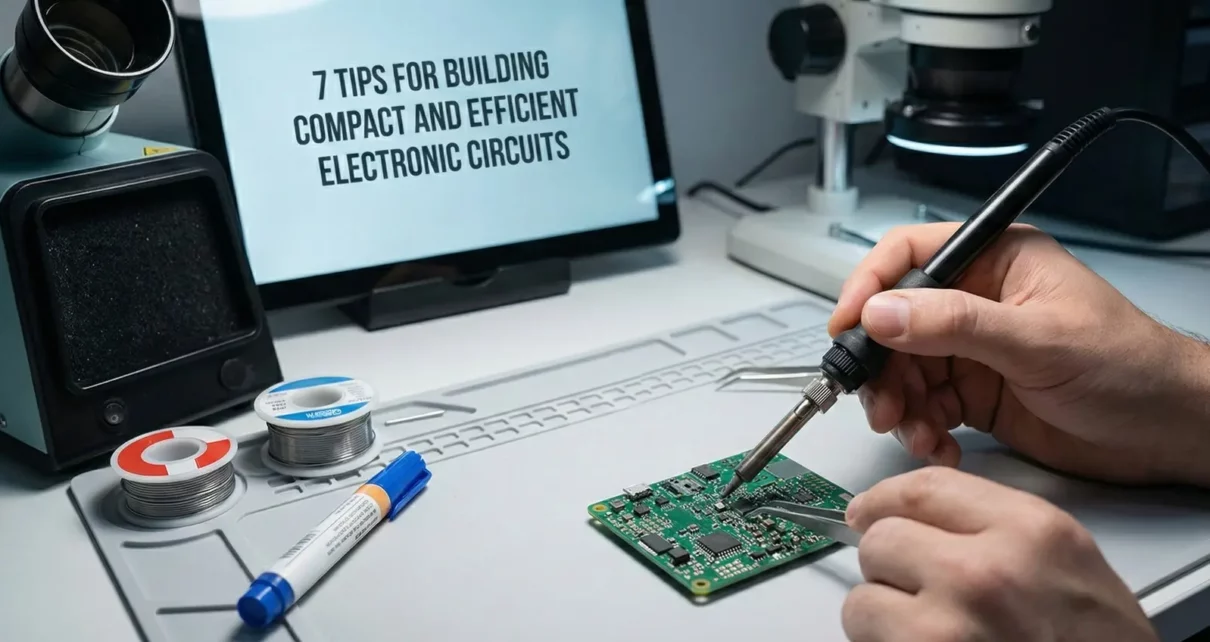
Proper assembly ensures the circuit performs as intended. Understand the orientation, polarity, and handling requirements of each component. Practice precise soldering techniques to produce clean, reliable joints. When working with small surface-mount parts, use tweezers, clamps, or magnification tools to avoid misplacement. Follow the finalized layout closely and verify each step during assembly to prevent avoidable errors.
5. Optimize Power Efficiency
Power efficiency affects circuit size, heat generation, and long-term reliability. Choose low-power components and high-efficiency voltage regulators and eliminate unnecessary current paths. Keep power traces short to minimize resistive losses and place decoupling capacitors near each IC’s power pins to stabilize voltage. For microcontroller-based designs, consider implementing power-saving modes such as sleep states or pulse-width modulation to reduce overall energy consumption.
6. Ensure Proper Wiring and Routing
Effective wiring and routing are fundamental to building compact, noise-free circuits. Keep signal paths organized, short, and purposefully arranged. Separate sensitive analog traces from high-current or noisy digital lines to limit interference. Avoid unnecessary vias and sharp routing angles and use labels or structured net naming to maintain clarity throughout the design process. Good routing improves signal integrity and enhances overall system performance.
7. Test the Circuit Thoroughly
After assembling the prototype, inspect the board for misplaced components, solder bridges, or incorrectly oriented parts. Use a multimeter to verify continuity, ground connections, and supply voltages before powering the board. Power the circuit gradually—preferably using a current-limited supply—and monitor for unexpected behavior. Document findings and correct issues early to ensure the final design meets your functional and performance goals.
Endnote
Building a compact and efficient electronic circuit requires thoughtful planning from the very first schematic to the final round of testing. By selecting the right components, designing a logical and space-efficient layout, assembling carefully, optimizing power usage, managing routing effectively, and validating your work, you can consistently produce reliable and high-performance circuits.
High Speed PCB Design: Essential Wiring Techniques for Optimal Performance