
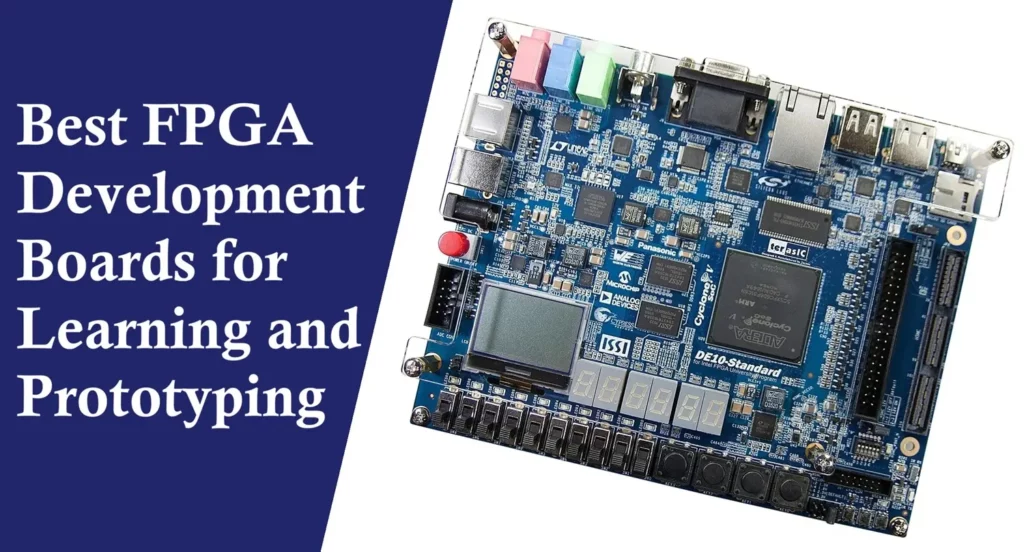
Field-Programmable Gate Arrays (FPGAs) might sound intimidating at first, but they’re actually one of the most exciting ways to learn digital design. Unlike microcontrollers (like Arduino or STM32) that run instructions on fixed hardware, FPGAs let you design your own hardware. That means you can create custom processors, signal processors, robotics controllers, or even video game consoles – all on a single chip.
What is an FPGA Development Board?
An FPGA (Field Programmable Gate Array) development board is a hardware platform that allows you to design, test, and implement digital circuits. Unlike microcontrollers, FPGAs are highly parallel and reconfigurable, making them ideal for applications in signal processing, machine learning, networking, cryptography, robotics, and prototyping custom processors.
The easiest way to start with FPGAs is by using a development board. These boards package the FPGA chip with memory, input/output (I/O) connectors, programming circuitry, and often extras like LEDs, switches, HDMI, or Ethernet. This saves you from wiring everything from scratch, so you can focus on learning and building.
In this guide, we’ll walk through 11 of the best FPGA development boards—from entry-level student kits to powerful professional options. For each board, we’ll highlight features, pros, cons, and the kinds of projects it’s best suited for.
The Two Major FPGA Ecosystems: AMD/Xilinx vs. Intel/Altera
Before diving into specific boards, it’s essential to understand the two dominant players in the FPGA market: AMD/Xilinx and Intel/Altera. Each has its own family of devices and a unique software ecosystem.
AMD/Xilinx:
This is the most common ecosystem for development boards. Their devices are typically programmed using Vivado, a powerful and comprehensive software suite. For hobbyists and students, the Vivado ML Standard Edition (formerly WebPACK) is a free version that supports a wide range of devices, including all the Artix-7 and Spartan-7 FPGAs found in popular development boards. Vivado includes an intuitive IP Integrator for connecting pre-built blocks, a robust simulator, and advanced synthesis tools.
Intel/Altera:
Intel’s FPGAs are programmed using Quartus Prime. The free Quartus Prime Lite Edition is the go-to choice for entry-level boards like the DE10-Nano. Quartus offers a similar feature set to Vivado, including a block diagram editor called Platform Designer. While the two toolchains have different learning curves, they both serve the same fundamental purpose of turning your HDL code into a working hardware design.
Who Uses FPGA Development Boards?
- Students & Educators: To learn digital logic, computer architecture, and hardware design.
- Hobbyists: For DIY projects like retro gaming, robotics, or audio processing.
- Engineers & Developers: To prototype custom hardware before mass production.
- Researchers: To explore high-performance computing, AI acceleration, and data processing.
- Industry: Used in telecom, aerospace, automotive, and medical devices.
Best Beginner Friendly and Intermediate FPGA Boards
1. Basys 3 – The Introductory Star
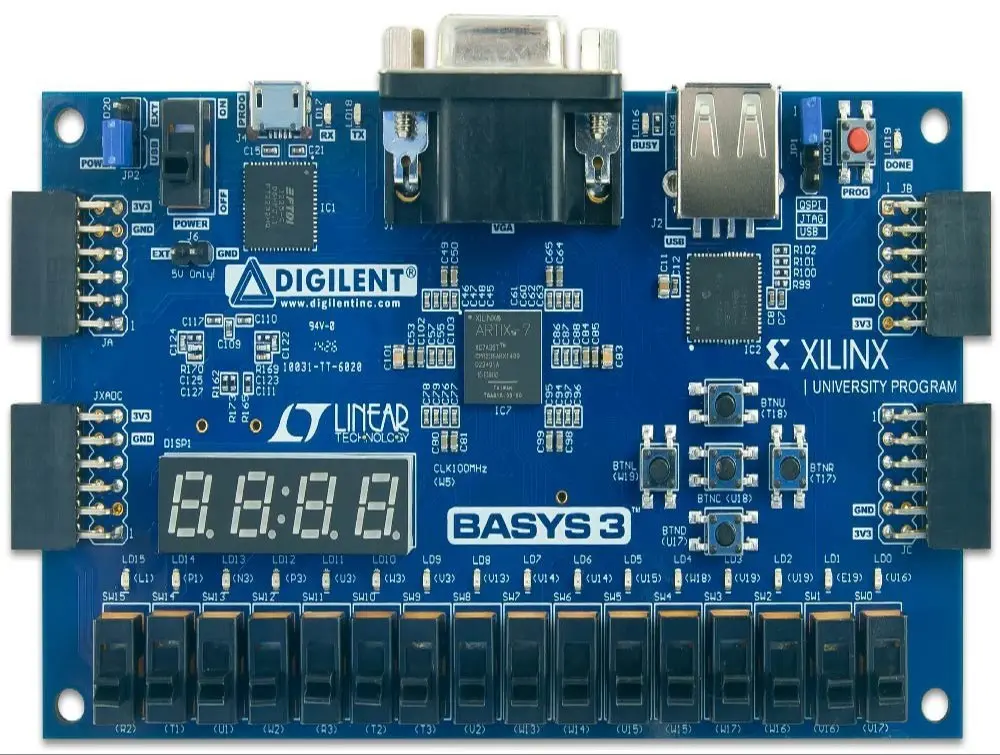
- FPGA: Xilinx Artix-7 (XC7A35T)
- Key Features:
- 16 switches, 16 LEDs, 4-digit seven-segment display
- VGA connector, USB-powered programming, PMODs for add-ons
- Why It’s Great: Comes with built-in peripherals ideal for learning fundamentals like state machines, counters, or VGA output.
- Limitations: No external RAM, so it’s not suitable for video buffering or high-speed designs.
- Price Range: ~$150–$180 USD
2. Nexys A7 – Next-Step Learning and Prototyping
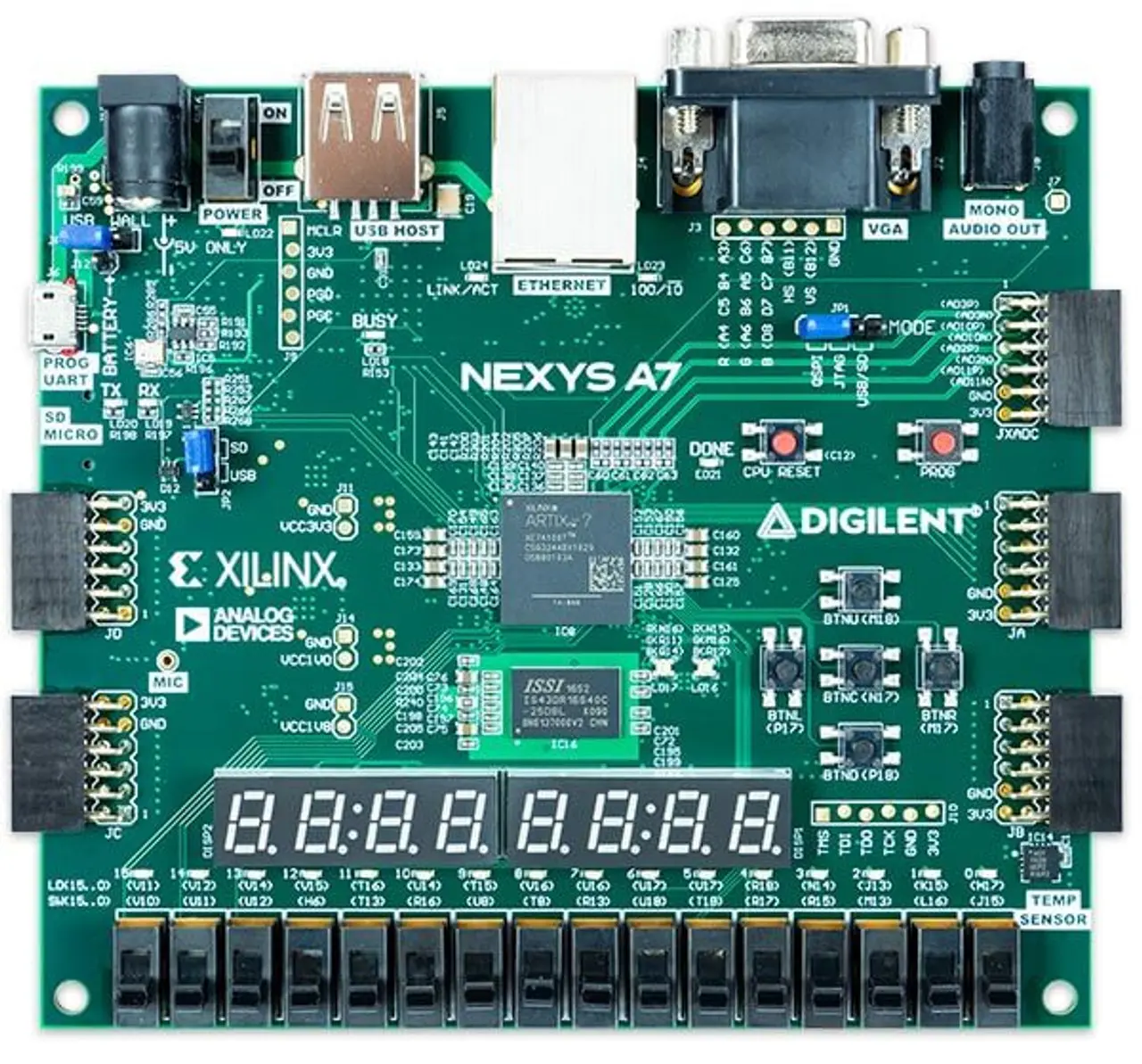
- FPGA: Xilinx Artix-7 (XC7A100T)
- Key Features:
- 128 MB DDR2 RAM, Ethernet port, multiple PMODs, 8-digit seven-segment display
- USB-JTAG programming, MicroSD slot
- Why It’s Great: More I/O and memory enable bigger projects—think soft-core CPUs, video processing projects.
- Limitations: Still lacks embedded processors (ARM cores).
- Price Range: ~$240–$300 USD
3. Arty 7 – The All-Rounder for Projects
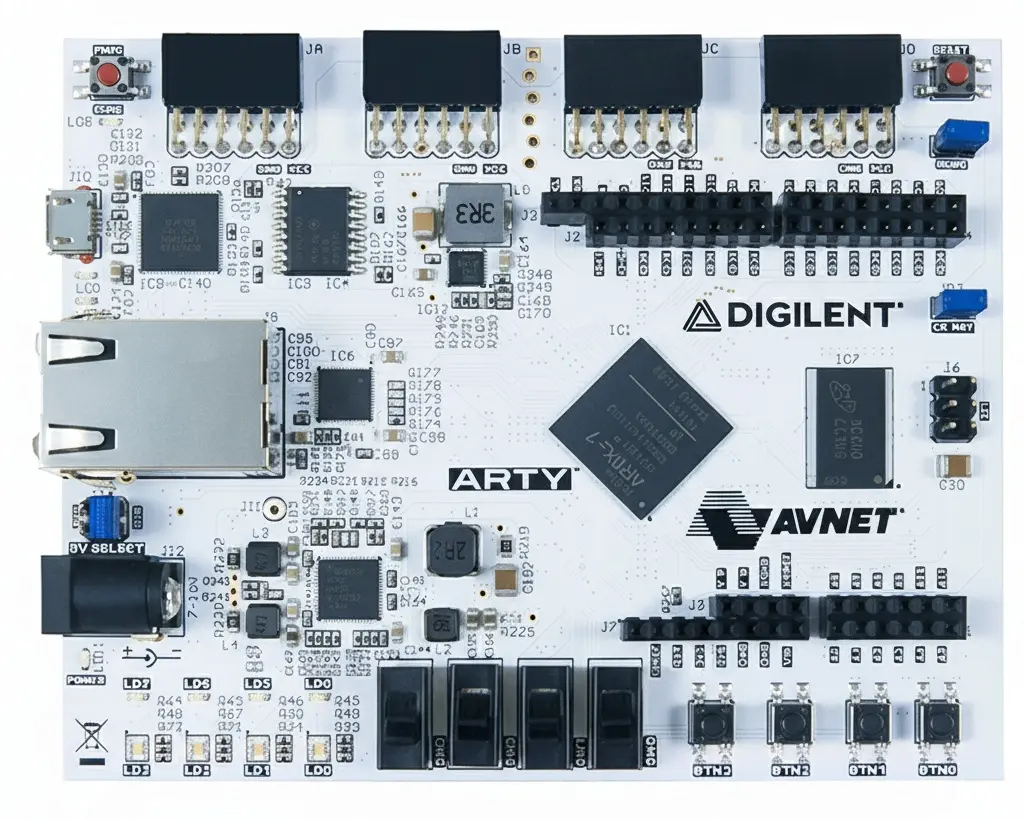
- FPGA: Xilinx Artix-7 (XC7A35T or XC7A100T)
- Key Features:
- 256 MB DDR3 RAM, Ethernet, Arduino & PMOD headers
- Why It’s a Top Pick: Strikes an excellent balance of cost, power, and flexibility. The Arduino-compatible headers make it easy to interface with existing shields and sensors. The onboard DDR3 and Ethernet make it a versatile prototyping platform.
- Limitations: Doesn’t include built-in switches, LEDs, or displays—so you’ll need external modules for simple labs.
- Price Range: ~$180–$250 USD
4. Arty S7 – Compact Yet Capable
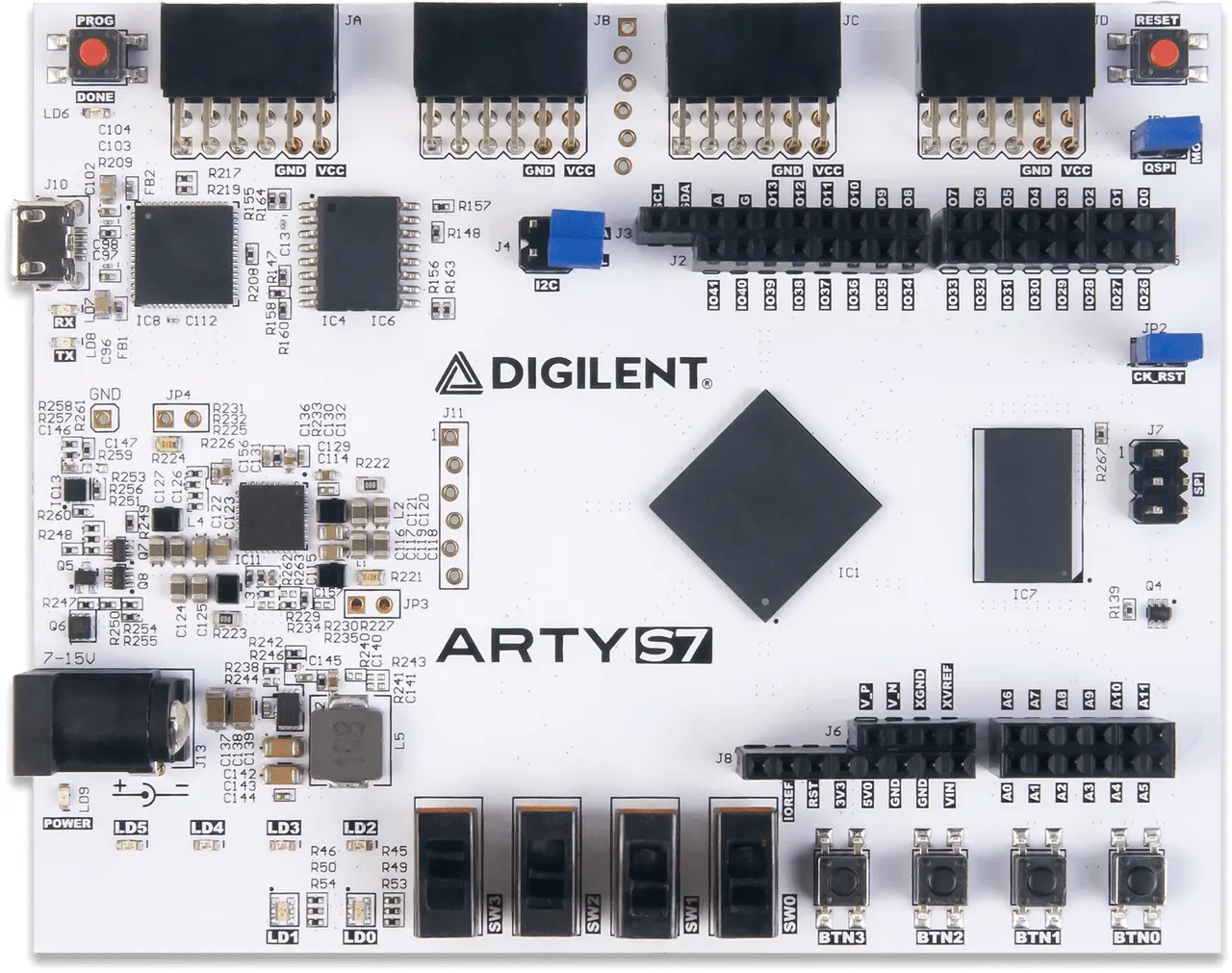
- FPGA: Xilinx Spartan-7
- Key Features: USB-JTAG programming, PMOD headers, low-power design
- Why It’s Great: Small, energy-saving FPGA ideal for battery-powered or embedded projects.
- Limitations: Less logic capacity and fewer peripherals than Artix-7 boards.
- Price Range: ~$140–$180 USD
5. Cmod A7 – Breadboard-Friendly Module
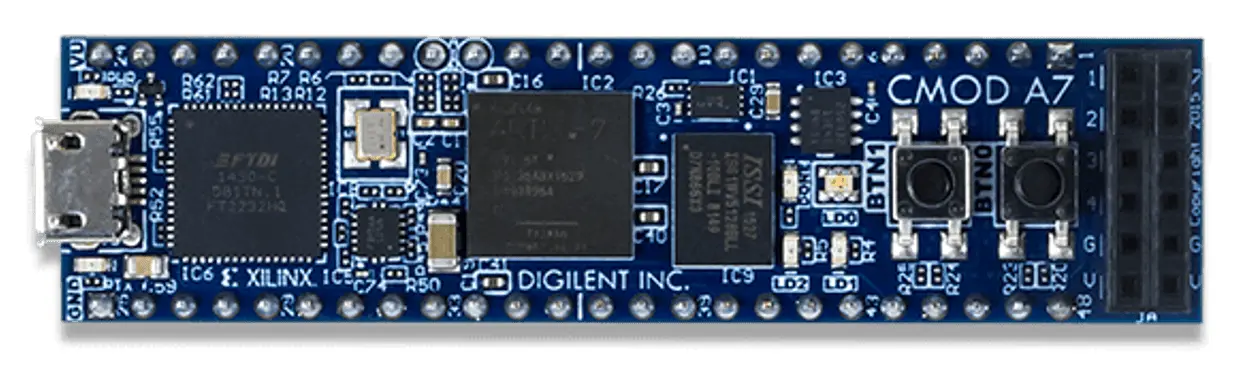
- FPGA: Xilinx Artix-7 (15T or 35T)
- Key Features:
- 48-pin DIP module, onboard SRAM & flash, USB-JTAG, 44 GPIO pins
- Why It’s Great: Designed to fit into breadboards—perfect for integrating FPGA logic with other electronics.
- Limitations: No built-in LEDs or displays; more “barebones” than full kits.
- Price Range: ~$110–$150 USD
FPGA + ARM (SoC) Boards
6. PYNQ-Z2 – For Python Programmers
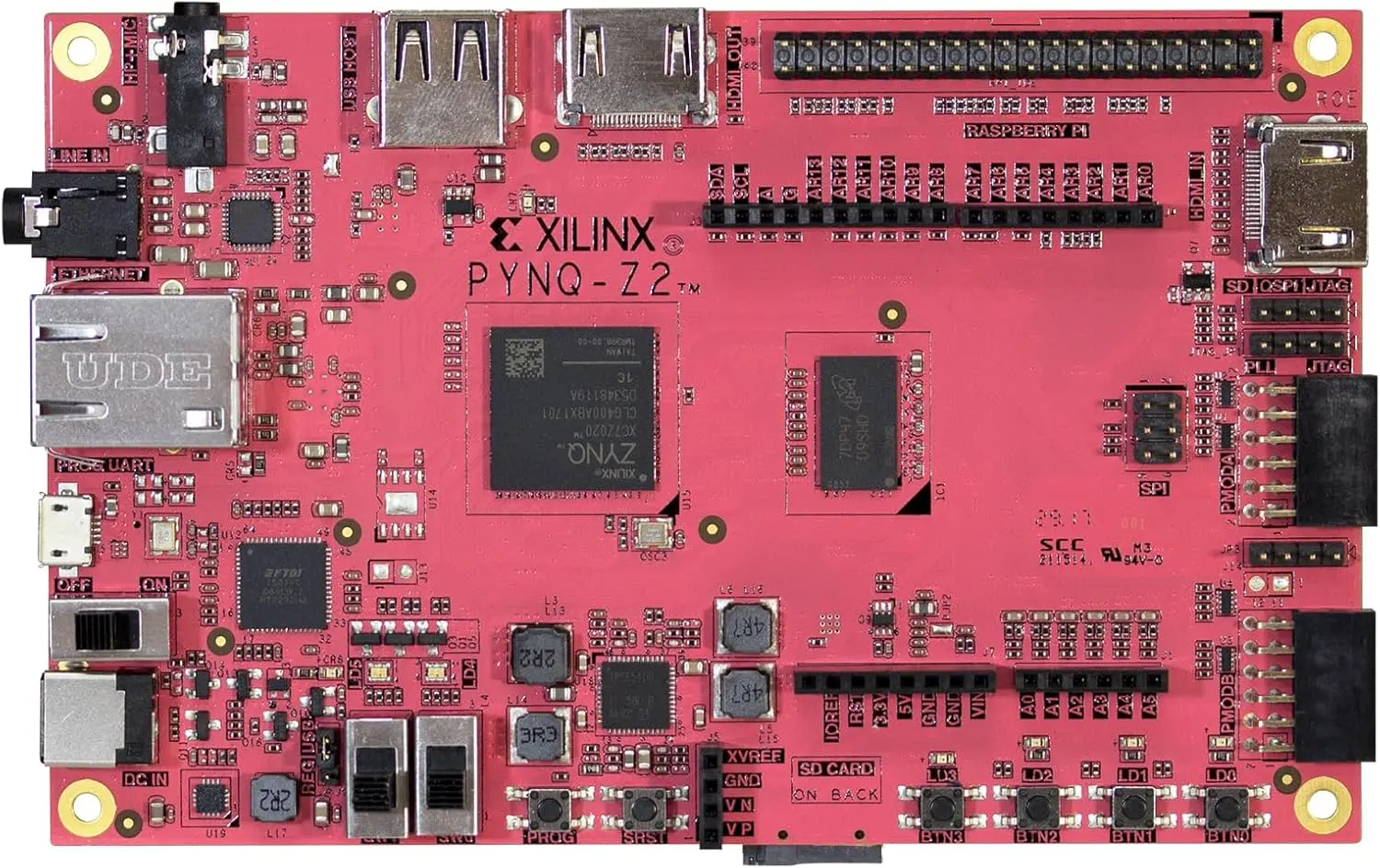
- FPGA + ARM: Zynq-7000 SoC (dual Cortex-A9 + FPGA fabric)
- Key Features: HDMI in/out, audio, 512 MB DDR3, Arduino & PMOD headers, runs Jupyter notebooks via PYNQ framework
- Why It’s Great: Use Python to control hardware—excellent for software developers stepping into FPGA.
- Limitations: Python overlay limits performance fine-tuning; hardware documentation sometimes less beginner centric.
- Price Range: ~$220–$300 USD
7. Arty Z7 – FPGA + Embedded Processing
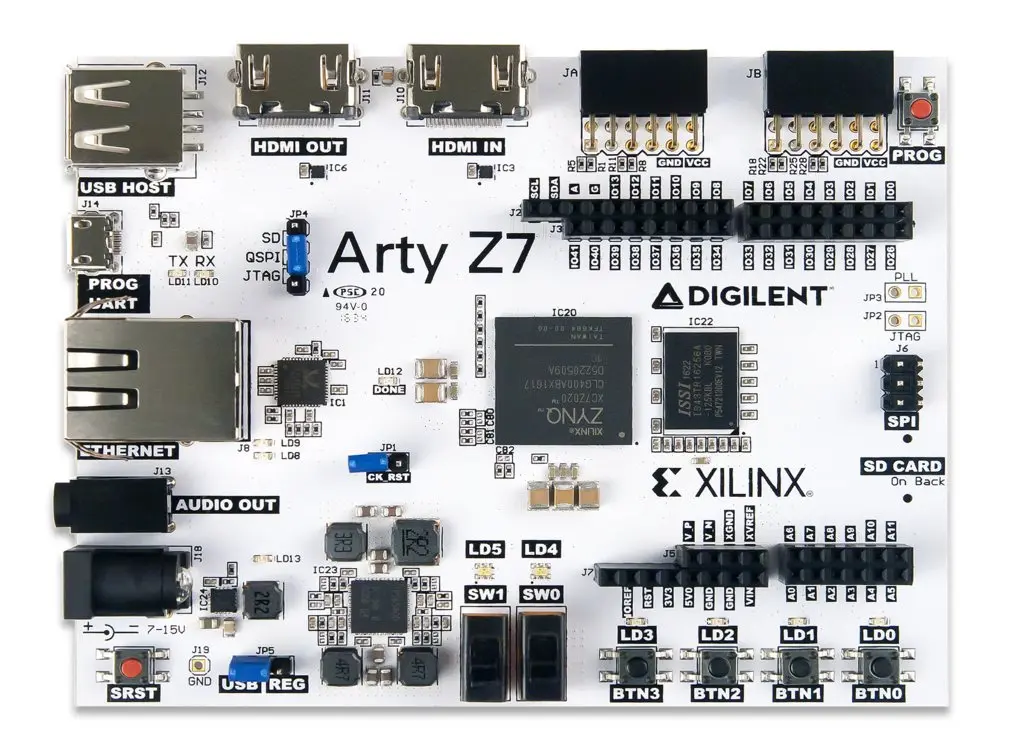
- FPGA + ARM: Zynq-7000 SoC
- Key Features: HDMI in/out, 512 MB DDR3, Ethernet, USB, SD card, Arduino & PMODs
- Why It’s Great: Ideal for multimedia, robotics, vision, and embedded systems with hardware and software integration.
- Limitations: Pricier and might be overkill for absolute beginners.
- Price Range: ~$250–$320 USD
8. ZedBoard – Advanced Embedded Projects
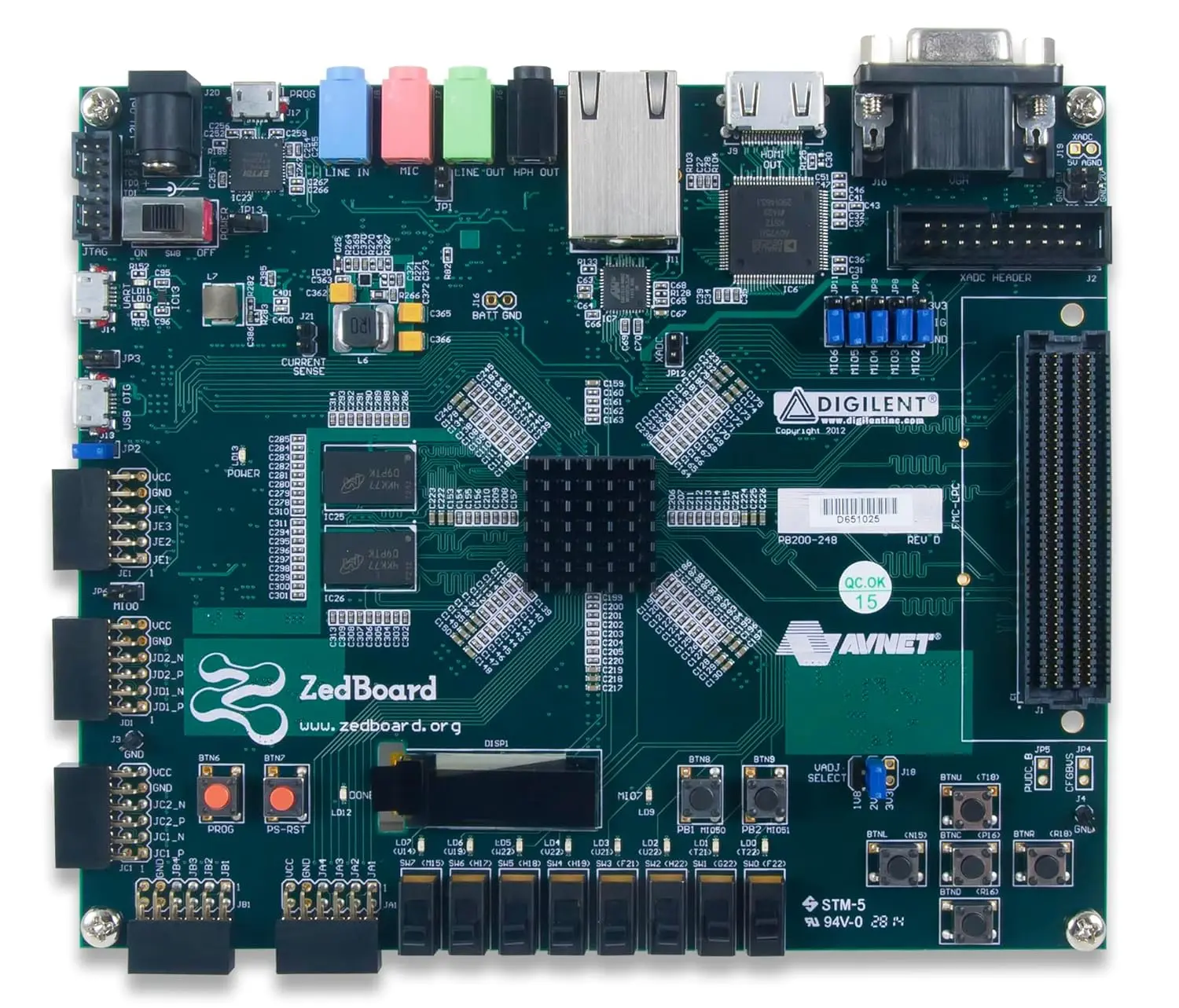
- FPGA + ARM: Zynq-7000 SoC
- Key Features: 1 GB DDR3, HDMI, Ethernet, FMC slot for add-ons, Linux support
- Why It’s Great: A time-tested platform for hardware-software co-design and real-world embedded development.
- Limitations: Bulkier and more complex—best for seasoned users.
- Price Range: ~$350–$450 USD
9. Genesys ZU – High-End Professional Platform
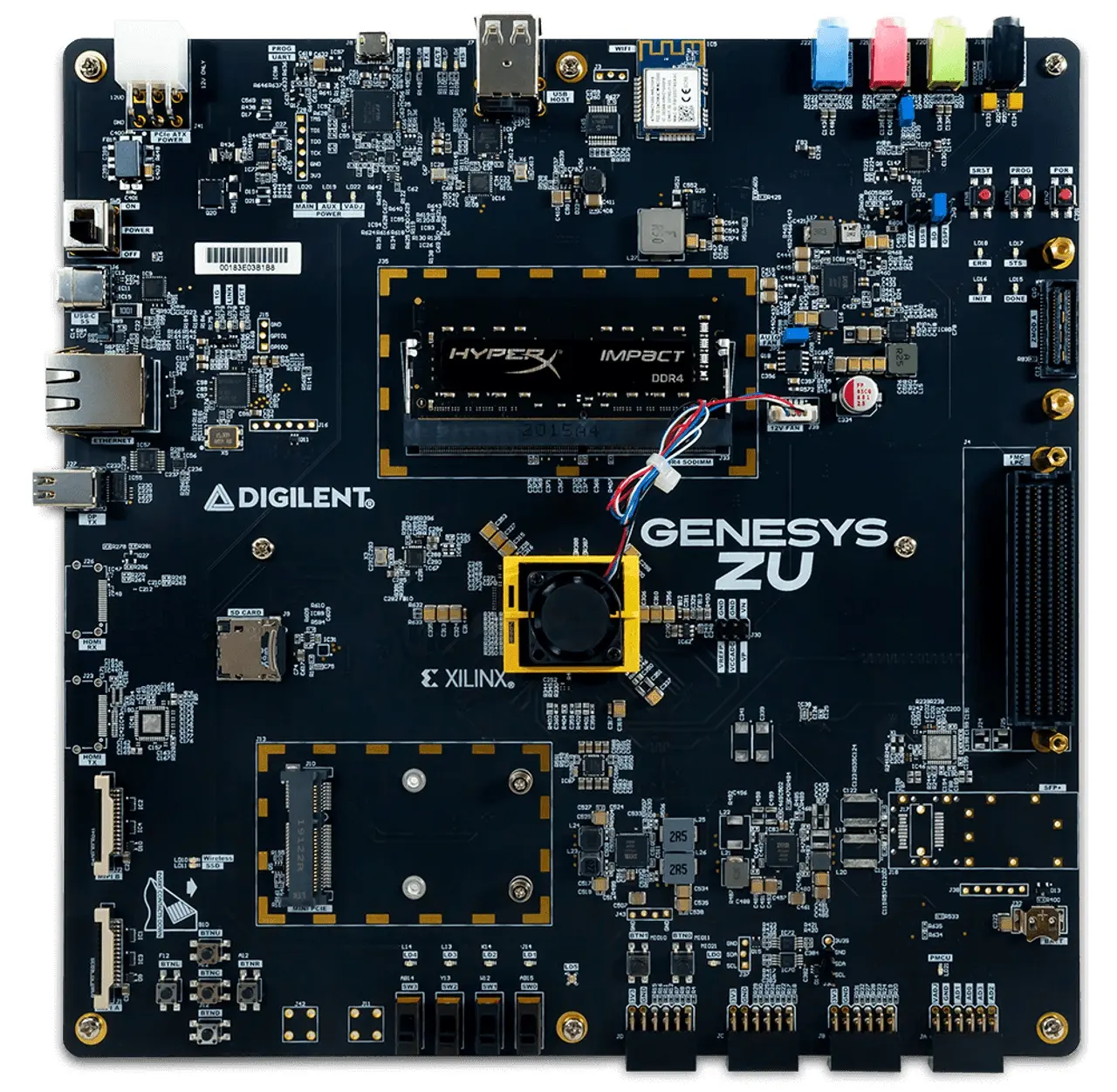
- FPGA + ARM: Zynq UltraScale + MPSoC
- Key Features: 4 GB DDR4 (PS), 1 GB DDR4 (PL), 16 GB eMMC, 4K HDMI, PMODs, FMC
- Why It’s Great: Massive compute power—ideal for AI, video processing, networking.
- Limitations: Expensive and overwhelming for novices.
- Price Range: ~$1,200–$1,600 USD
10. Cora Z7 – Compact SoC FPGA Starter
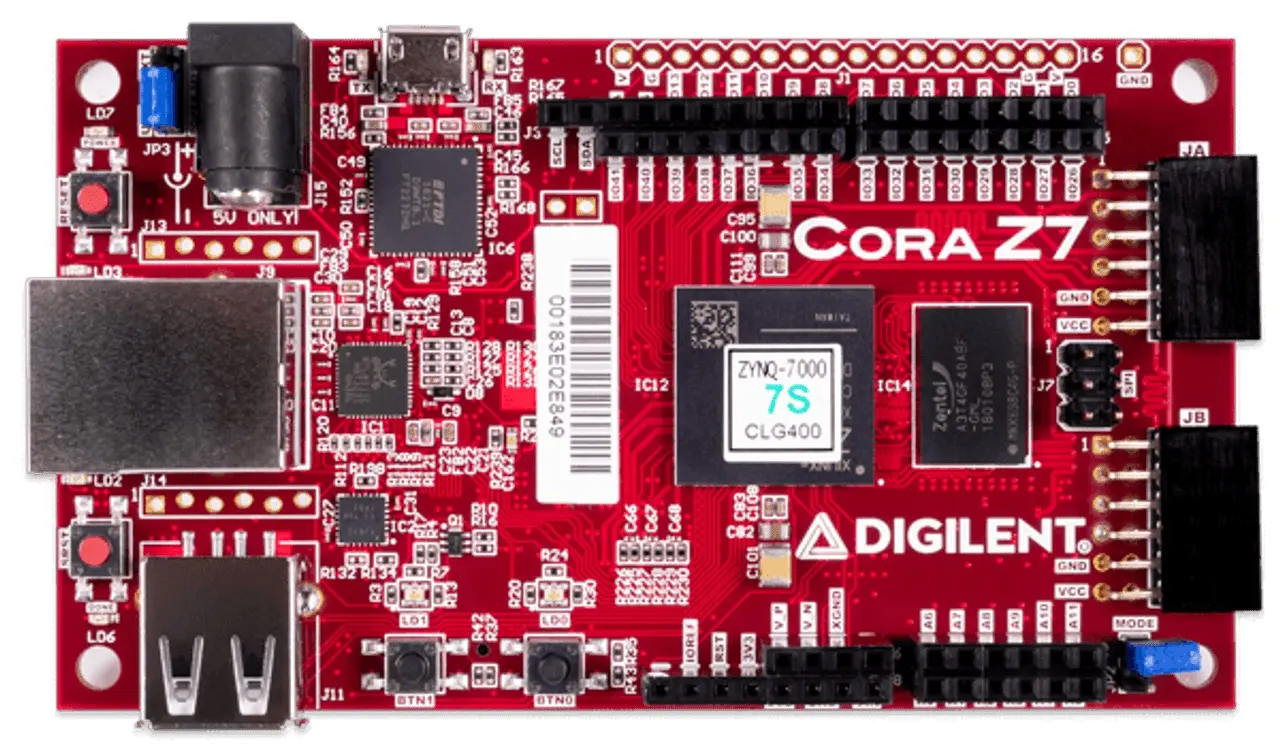
- FPGA + ARM: Zynq-7000 SoC
- Key Features: 512 MB DDR3, HDMI output, MicroSD slot, PMODs
- Why It’s Great: One of the most affordable Zynq boards—great for dipping your toes into FPGA + ARM SoC.
- Limitations: Simpler build and fewer extras than Arty Z7 or PYNQ-Z2.
- Price Range: ~$150–$200 USD
DE10 – Intel Compatible Boards
There are three variants of DE10: DE10-Lite (Basic 150$), DE10-Nano (Intermediate 250$), DE10-Standard (Advance 500$).
A. DE10-Lite – Budget-Friendly FPGA Development
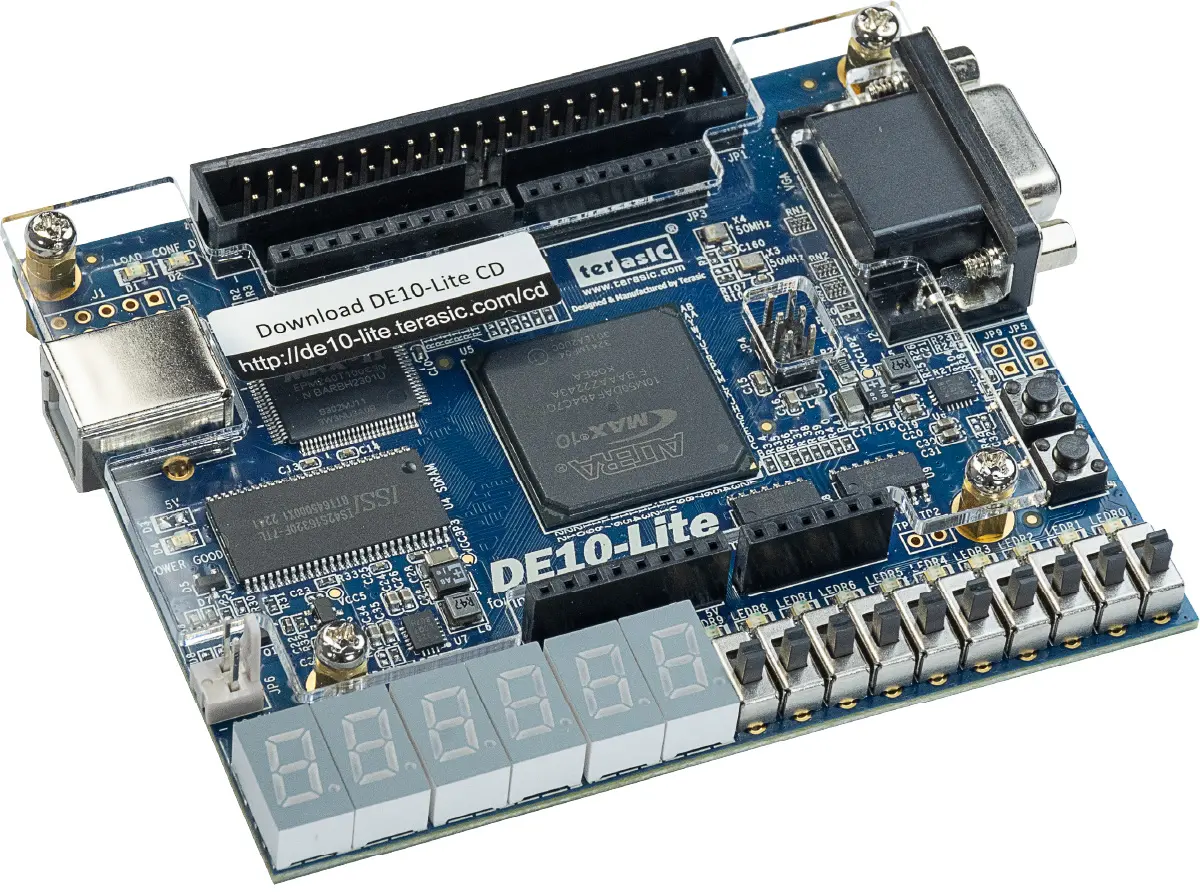
- FPGA: Intel MAX 10 (50K logic elements)
- Processor: Nios II soft processor (no ARM CPU)
- Memory: 64 MB SDRAM
- I/O: VGA output, 2×20 GPIO expansion header, Arduino UNO R3 header, accelerometer, 10 LEDs, 10 slide switches, 6 seven-segment displays, 2 push buttons
- Programming: On-board USB-Blaster for FPGA configuration
- Ideal For: Digital logic courses, basic FPGA prototyping, educational projects
- Limitations: No ARM processor; limited I/O compared to higher-end models
- Price: ~$82 (academic), ~$140 (commercial)
B. DE10-Nano – ARM + FPGA for Embedded & Retro Projects
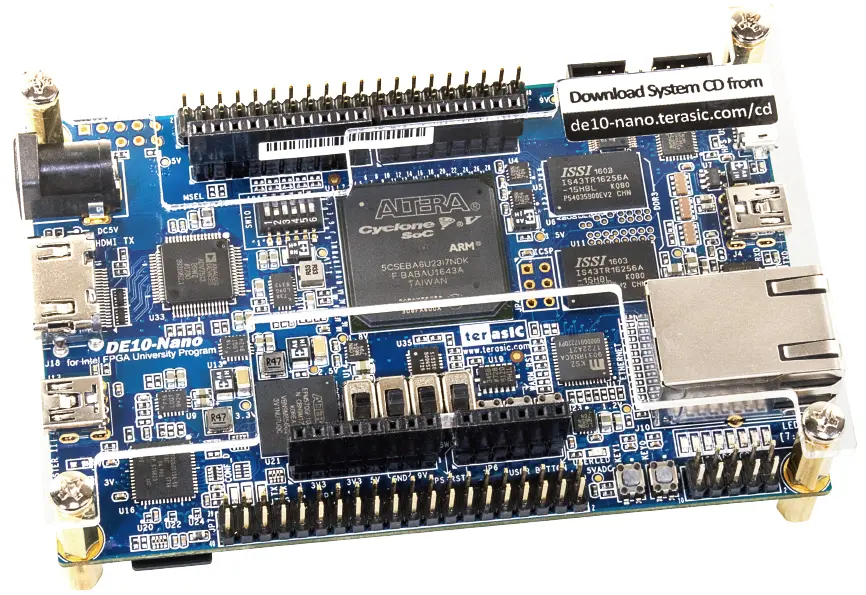
- FPGA: Intel Cyclone V SoC (5CSEBA6U23I7)
- Processor: Dual-core ARM Cortex-A9 (925 MHz)
- Memory: 1 GB DDR3 SDRAM
- I/O: HDMI, Ethernet, USB, GPIO, Arduino headers
- Ideal For: Embedded systems, retro gaming emulation (e.g., MiSTer project)
- Limitations: Requires Intel Quartus tools; may have a steeper learning curve for beginners
- Price: ~$190 (academic), ~$225 (commercial)
C. DE10-Standard – High-Performance FPGA Development
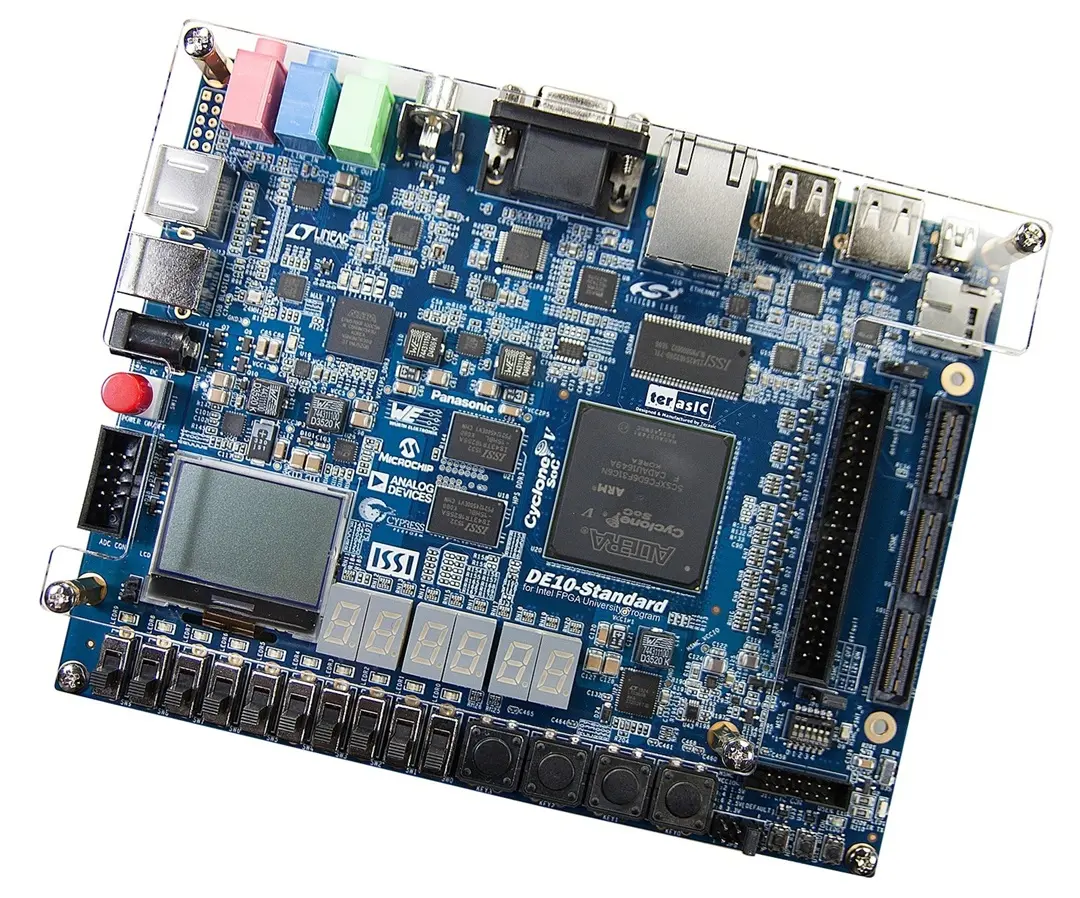
- FPGA: Intel Cyclone V SoC (5CSXFC6D6F31C6N)
- Processor: Dual-core ARM Cortex-A9
- Memory: Enhanced memory capacity compared to DE10-Nano
- I/O: Includes high-speed expansion connectors, black & white mini LCD
- Ideal For: Advanced FPGA development, high-performance applications requiring more memory and I/O capabilities
- Limitations: Higher cost; may be overkill for simple projects
- Price: ~$365 (academic), ~$499 (commercial)
Summary Table
| Board | Target Audience | Highlights & Use Case | Estimated Price (USD) |
|---|---|---|---|
| Basys 3 | Absolute beginners | Built-in switches, LEDs, VGA | $150–$180 |
| Arty 7 | Hobbyists, general projects | DDR3, Ethernet, Arduino headers | $180–$250 |
| Nexys A7 | Intermediate learners | DDR2, Ethernet, more I/O | $240–$300 |
| Arty S7 | Compact projects | Low power, small form factor | $140–$180 |
| Cmod A7 | Embedded / breadboard use | DIP module with SRAM/flash | $110–$150 |
| PYNQ-Z2 | Python fans, embedded learners | PYNQ/Jupyter, HDMI/audio | $220–$300 |
| Arty Z7 | Media/robotics projects | HDMI, DDR3, flexible I/O | $250–$320 |
| ZedBoard | Advanced embedded developers | FMC, Linux, large memory | $350–$450 |
| Genesys ZU | High-performance pros | UltraScale+ SoC, 4K HDMI, huge memory | $1,200–$1,600 |
| Cora Z7 | Budget SoC learners | Compact Zynq, basic I/O | $150–$200 |
| DE10-Lite | Education, basic FPGA | VGA, GPIO, Arduino | 80$–$140 |
| DE10-Nano | Retro & Intel-ecosystem projects | Popular community, SoC, HDMI, Ethernet, USB, GPIO | $140–$190 |
| DE10-Standard | Advanced FPGA development | High-speed connectors, LCD | $370–$500 |
How to Choose the Right Board
- Just starting out? → Basys 3 (digital basics) or Arty 7 (general projects).
- Want FPGA + ARM/Linux? → PYNQ-Z2 (Python), Arty Z7, or DE10-Nano.
- Need a breadboard module? → Cmod A7.
- Going professional with big projects? → ZedBoard or Genesys ZU.
- Low-cost experimentation? → Cora Z7 or Arty S7.
Tips for Beginners
- Start small, learn big: Begin with Basys 3 or Arty 7 to grasp basics, then move to SoC boards when you hit real-world projects.
- Budget matters: For under $200, you can get into any key category. Boards like Cora Z7 or DE10-Nano are excellent SoC options at beginner prices.
- Know your toolchain: Xilinx boards use Vivado; Intel (DE10-Nano) uses Quartus. Choose based on your future direction (Xilinx vs Intel ecosystem).
- Physical and online resources: Boards like Basys 3, Nexys A7, Arty 7, and PYNQ-Z2 have large communities and lots of tutorials, which can really smooth your learning curve.
No matter your level, there’s an FPGA board that fits your needs. Pick one that matches your budget, project goals, and learning style, and you’ll be ready to unlock the full potential of FPGA technology.
Buying Guide for FPGA Development Boards
Here are the key factors to consider while choosing the best FPGA Development boards for yourself.
a. Skill Level
- Beginner / Student: Look for affordable boards with easy-to-use toolchains, tutorials, and community support.
- Intermediate / Hobbyist: Boards with more logic resources, IOs, and features for experimenting with larger projects.
- Professional / Research: High-performance boards with powerful FPGAs, high-speed interfaces, and advanced toolchain support.
b. FPGA Family & Logic Capacity
- Entry-level (e.g., Xilinx Spartan, Intel Cyclone): Good for learning and simple projects.
- Mid-range (e.g., Xilinx Artix, Intel MAX 10): Balance of cost, performance, and flexibility.
- High-end (e.g., Xilinx Kintex, Virtex, Intel Stratix): For AI acceleration, 5G, networking, and complex research.
c. Onboard Features
- Memory: Look for SDRAM, DDR3/DDR4 for handling large datasets.
- I/O & Connectivity: USB, HDMI, Ethernet, PCIe, GPIO headers.
- Peripherals: LEDs, buttons, PMOD connectors, ADC/DAC, camera inputs.
d. Software Toolchain
- Xilinx Boards: Use Vivado or ISE.
- Intel Boards: Use Quartus Prime.
- Lattice Boards: Use Diamond or Radiant.
- Check licensing (some boards come with free versions, others require paid editions).
e. Community & Documentation
Boards with strong online communities, tutorials, and GitHub repositories make learning much easier.
Tips Before Buying
- Check toolchain compatibility with your OS (Windows, Linux, Mac).
- Consider future scalability (don’t buy too small if you plan to grow your projects).
- Look for community examples (GitHub projects, forums, tutorials).
- Verify power requirements and whether a USB supply is enough or external power is needed.
Getting Started with Your First FPGA Project
The “Hello, World!” of FPGAs is the blinking LED. This simple project teaches you how to define I/O pins, write a basic state machine, and synthesize your design. It’s the perfect entry point into the workflow.
languages for getting started in FPGA development
Core Language: Verilog or VHDL → main FPGA hardware languages
Next Important next:
- Tcl → automate FPGA tools (Vivado/Quartus)
- C/C++ → embedded processors & High-Level Synthesis
Useful extra once
- Python → testing (cocotb), automation
- SystemVerilog → advanced design & verification
- Shell (Bash/PowerShell) → build scripts
Optional ones: OpenCL, SystemC, MATLAB/Simulink → for special use cases (acceleration, modeling, DSP)
Learning order: Verilog/VHDL → Tcl → C → Python → (SystemVerilog / extras).
Best FPGA Courses for Beginners by Ofer Keren
Ofer Keren is an experienced FPGA and VHDL engineer with a strong background in electronic and computer engineering. He has worked in leading tech companies, including Elbit Systems, ELTA, and Get SAT, and has trained tens of thousands of students worldwide. On Udemy, he teaches a variety of FPGA-focused courses, such as:
- Vivado – Learn From the Beginning with PCIe Project
Learn FPGA design in Vivado from scratch, covering fundamental concepts and building a full PCIe project step by step. Perfect for beginners and intermediate learners. - Learn VHDL for FPGA and CPLD Development
Start with the basics of VHDL programming and progress to real-world FPGA and CPLD applications. Ideal for students and engineers who want hands-on coding experience. - FPGA UART Implementation – Communication Protocol Series Vol. 1
A practical guide to understanding and implementing UART communication on FPGA, with detailed coding and testing examples. Great for mastering FPGA-based protocols. - Vivado FIFO vs AXI FIFO – Practical Guide
Explore the differences between regular FIFO and AXI FIFO in Vivado. This course explains theory and provides hands-on projects to strengthen FPGA knowledge. - FPGA VHDL Coding for QSPI NOR Flash Memory
Master VHDL coding techniques for interfacing QSPI NOR flash memory with FPGA. Learn step by step with practical coding sessions and real hardware demonstrations. - Arduino Bionic Arm with Voice Recognition
Build your own robotic bionic arm using Arduino and voice recognition technology. A fun and educational project for robotics enthusiasts, makers, and students.
Conclusion
FPGA development boards provide a tangible, hands-on way to master digital design and unlock the power of parallel computing. The best boards offer a diverse range of options – some focusing on cost-effectiveness and ease of use, others delivering advanced performance and flexibility. Whether you’re a student just beginning your journey, a hobbyist with ambitious projects, or a professional engineer, there is a board well-suited to your needs.
For beginners, entry-level options like the Basys 3, Arty 7 provide an accessible path with plenty of built-in features and strong community support.
Intermediate users looking for more memory, connectivity, and expansion options may find the Nexys A7, Arty Z7, Terasic DE10-Lite or PYNQ-Z2 ideal for larger projects and embedded applications.
Meanwhile, professionals and researchers can harness the power of boards like the ZedBoard or Genesys ZU for high-performance computing, machine learning, or advanced prototyping.
MiiEIAOD Tang Nano 9K is a lightweight, affordable board for entry-level experimentation and RISC-V development.
Ultimately, the “best” FPGA board depends on your learning goals, budget, and project requirements. Start small, grow your skills, and then move to more powerful platforms as your confidence and ambitions expand. With the right FPGA development board, you’re not just learning digital design—you’re building the foundation for innovation in robotics, IoT, AI, and beyond.