
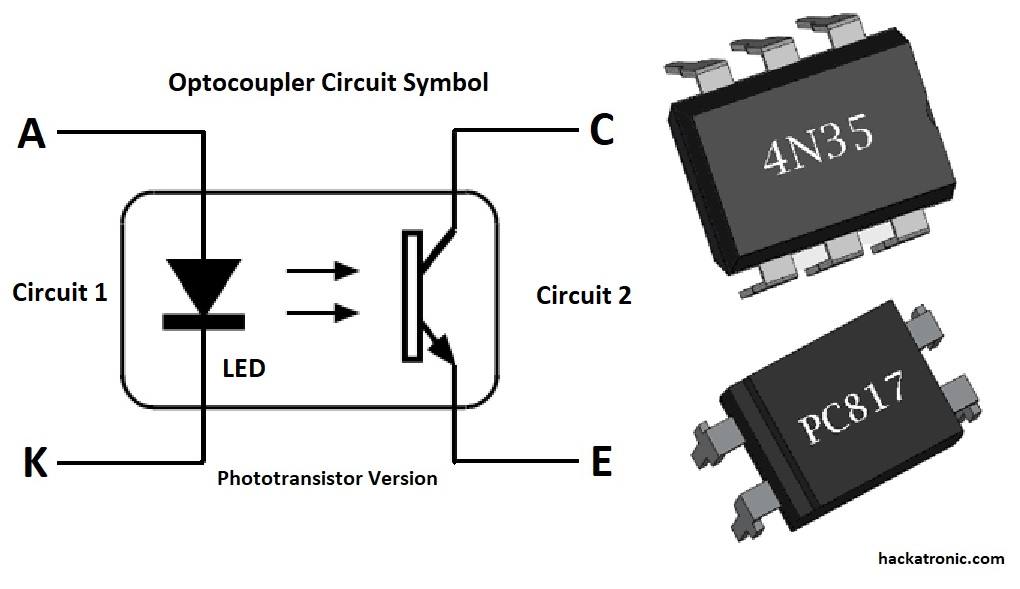
Optoisolators and Optocoupler sound very similar and they are the same in terms of workings and other features let’s see what are optoisolators and optocoupler. There are some differences due to which they are given different names. Photocoupler is another name of the optocoupler. An optocoupler or photocoupler and an optoisolator are semiconductor devices that connect two circuits but also keep them electrically isolated. They are used in circuits where there is a big electric voltage gap between two circuits, and one circuit cannot be operated on another voltage. We can control a circuit by another circuit keeping them isolated from each other. They can be used in optical encoders where there is a need to detect light and many other circuits where there is a need of optical links.
Optoisolators and Optocouplers what are the differences?
The terms optoisolator and optocoupler are often used interchangeably in electronics. Both describe components that transmit electrical signals between two isolated circuits using light, ensuring galvanic isolation. While their operation is the same, some subtle differences in emphasis exist.
Optoisolators
- Typically used in applications where safety and protection are the primary goals.
- Common in high-voltage and industrial systems, where protecting low-voltage control circuits from high-voltage power stages is critical.
- Isolation ratings often range from 2.5 kV to over 5 kV, depending on package and application.
- Found in medical devices, industrial drives, and power electronics where certified isolation standards must be met.
Optocouplers
- The term often emphasizes signal transfer between circuits while maintaining electrical isolation.
- Widely used in digital communications, microcontroller interfaces, and general control circuits.
- Provide isolation ratings typically in the 1–5 kV range, which is sufficient for most low- to medium-voltage systems.
- Common in logic-level data transmission, switching power supplies, and noise-sensitive circuits.
Key Point
- Optoisolator → highlights isolation and protection in high-voltage or safety-critical designs.
- Optocoupler → highlights signal coupling between circuits with isolation as a by-product.
- In practice, the terms are used interchangeably in datasheets and by manufacturers. The actual difference comes down to specifications in the datasheet (isolation voltage, creepage distance, bandwidth, current transfer ratio, etc.), not just the name.
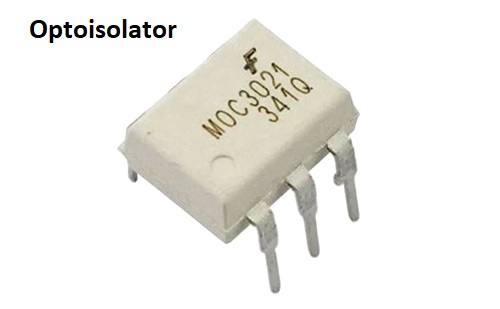
Optoisolators and Optocouplers Basics:
The optocoupler or optoisolator is consists of two components a light emitter and another one is the light detector.
Light Emitter:
Generally, a light-emitting diode (LED) is used as an emitter. It converts the input signal into light waves.
Light Detector:
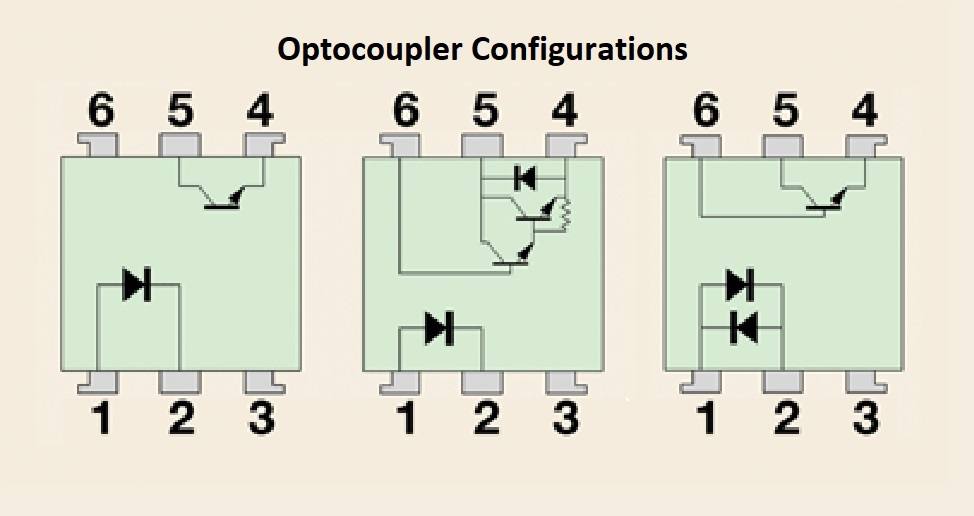
A light detector can be a photodiode, a phototransistor, or a photodarlington. It detects the lights coming from the emitter and converts them into an electrical signal at a higher voltage.
Both are made for the same wavelength range for good efficiency. The optoisolator or optocoupler may contain some extra circuit within it like an amplifier.
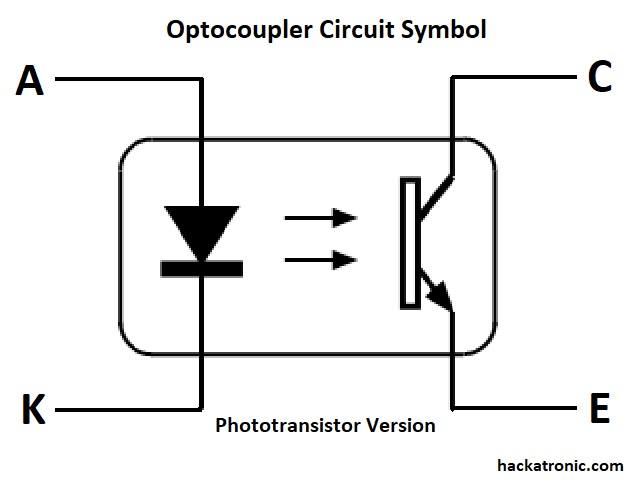
Symbol of Optocoupler:
The configuration of the optocoupler varies depending on requirements. The emitter side remains almost similar, but the sensor side can be different, it can be a photodiode, phototransistor, or a photodarlington.
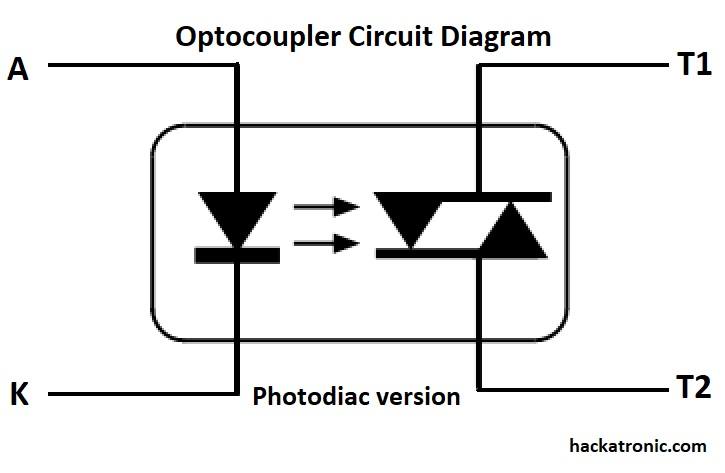
Optocouplers and solid-state relays:
optocouplers are used to switch solid-state relays like Triac and SCR. They are a very important part of the switching circuit as they provide a very high value of resistance and isolate input from the output. they are widely used in AC, DC power systems SMPS and other types of power supplies.
Optocoupler can switch a few hundreds of volts and few amperes of current but solid-state relays can work on hundreds of thousands of volts and hundreds of amperes of current.
Applications
- Solid-State Relays (SSRs): Used to drive TRIACs or power transistors, allowing microcontrollers to safely switch AC loads.
- Microcontroller Interfaces: Provide noise-immune data transfer between logic and peripheral circuits.
- Switch-Mode Power Supplies & Inverters: Enable isolated feedback control.
- Industrial & Medical Equipment: Ensure operator and equipment safety by maintaining strict isolation.
Conclusion
Optoisolators and optocouplers are essentially the same type of device—semiconductor components that use light to transfer signals while keeping two circuits electrically isolated. The difference lies mainly in emphasis: optoisolators highlight safety and high-voltage isolation, while optocouplers highlight signal transfer with built-in isolation. In practice, the terms are used interchangeably, and the true distinction comes from the datasheet specifications such as isolation voltage, transfer ratio, and bandwidth. Whether used in solid-state relays, microcontroller interfaces, or industrial equipment, both devices play a vital role in protecting circuits and ensuring reliable communication across voltage domains.
Photocoupler (Optocoupler / Optoisolator) – Construction, Working, Types & Applications
Difference Between Photodiode, Phototransistor and Photoresistor
Phototransistor – Construction, Working, Types and Applications