
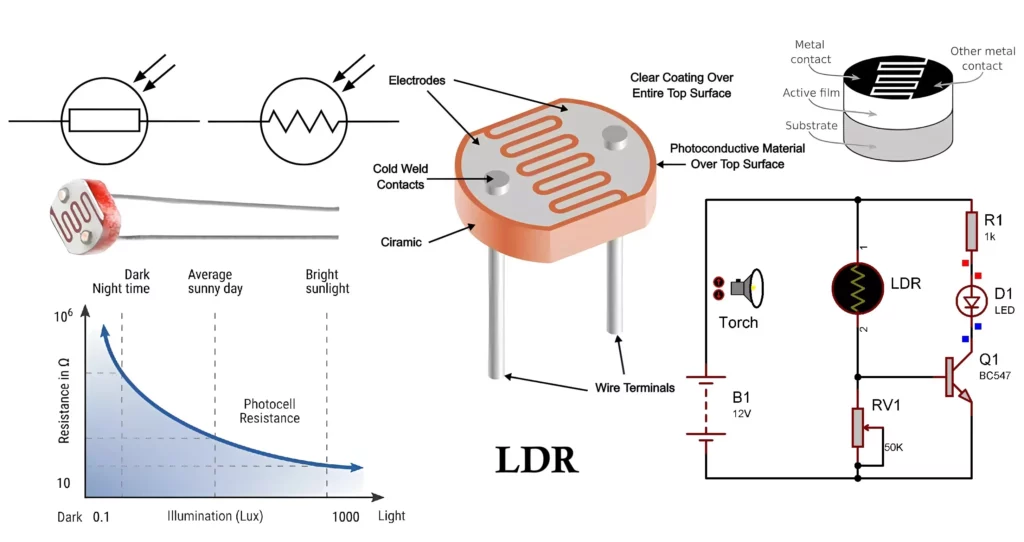
Light Dependent Resistor (LDR) are widely used in various applications where light detection is required, such as in automatic street-lights, camera light meters, and burglar alarm systems. This article will delve into the symbol, construction, working principle, characteristics, advantages, disadvantages, and applications of LDRs. Additionally, a simple LDR circuit to detect light will be explained in detail.
A Light Dependent Resistor (LDR), also known as a photoresistor, is a type of passive electronic component that changes its resistance based on the intensity of light falling on it.
For high-quality PCB manufacturing and assembly services, visit NextPCB
NextPCB offers a comprehensive one-stop solution for PCB manufacturing. Every component is verified for authenticity through our stringent Incoming Quality Control (IQC) process and sourced directly from suppliers, ensuring both reliability and reduced BOM costs.
Symbol of LDR
The symbol of an LDR in electronic circuits is a resistor with two arrows pointing towards it, indicating its sensitivity to light. The symbol is as follows:
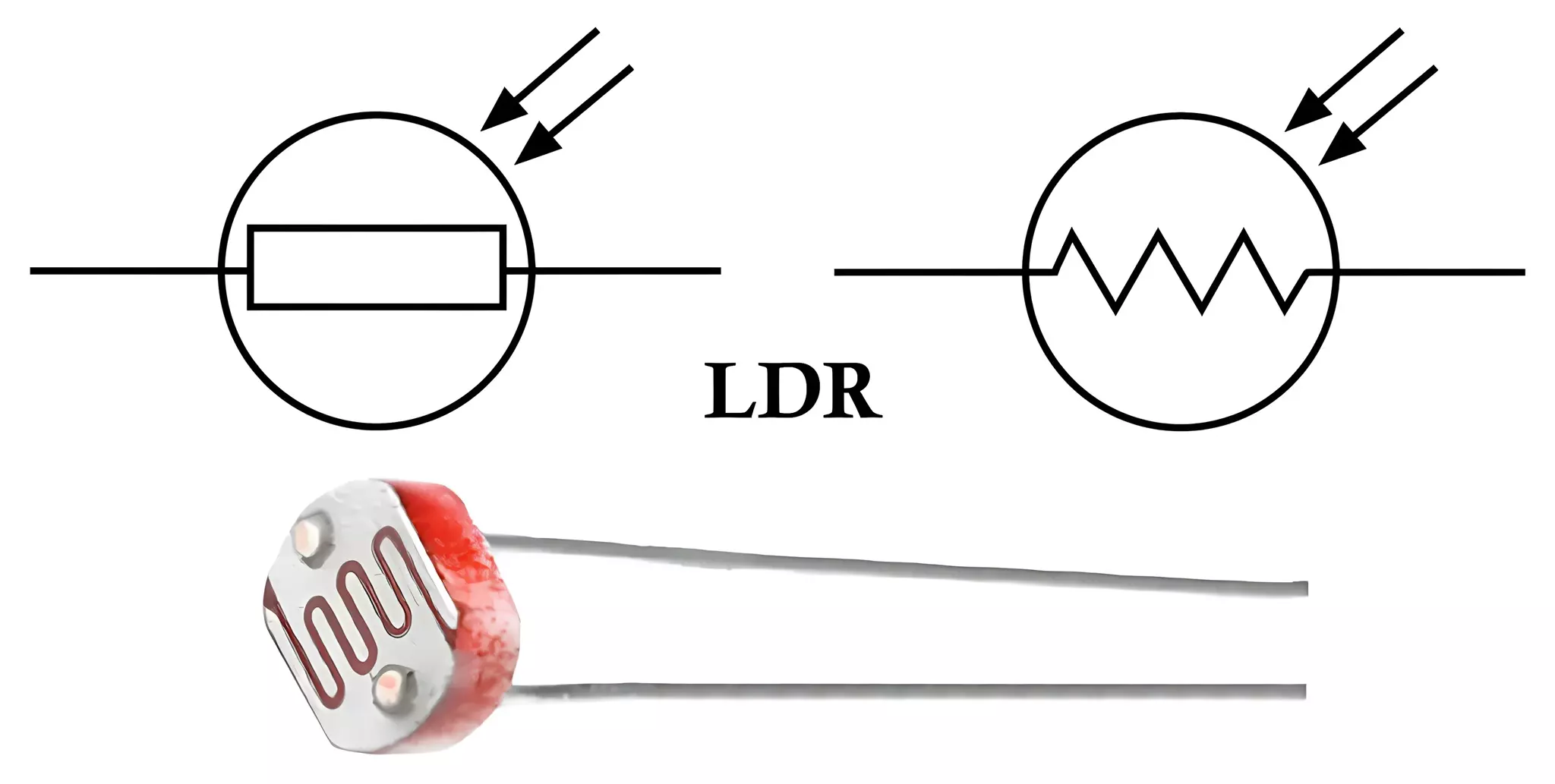
The arrows represent the light falling on the resistor, and the resistor itself is depicted with a zigzag line, similar to a standard resistor symbol.
Construction of LDR / Photoresistor
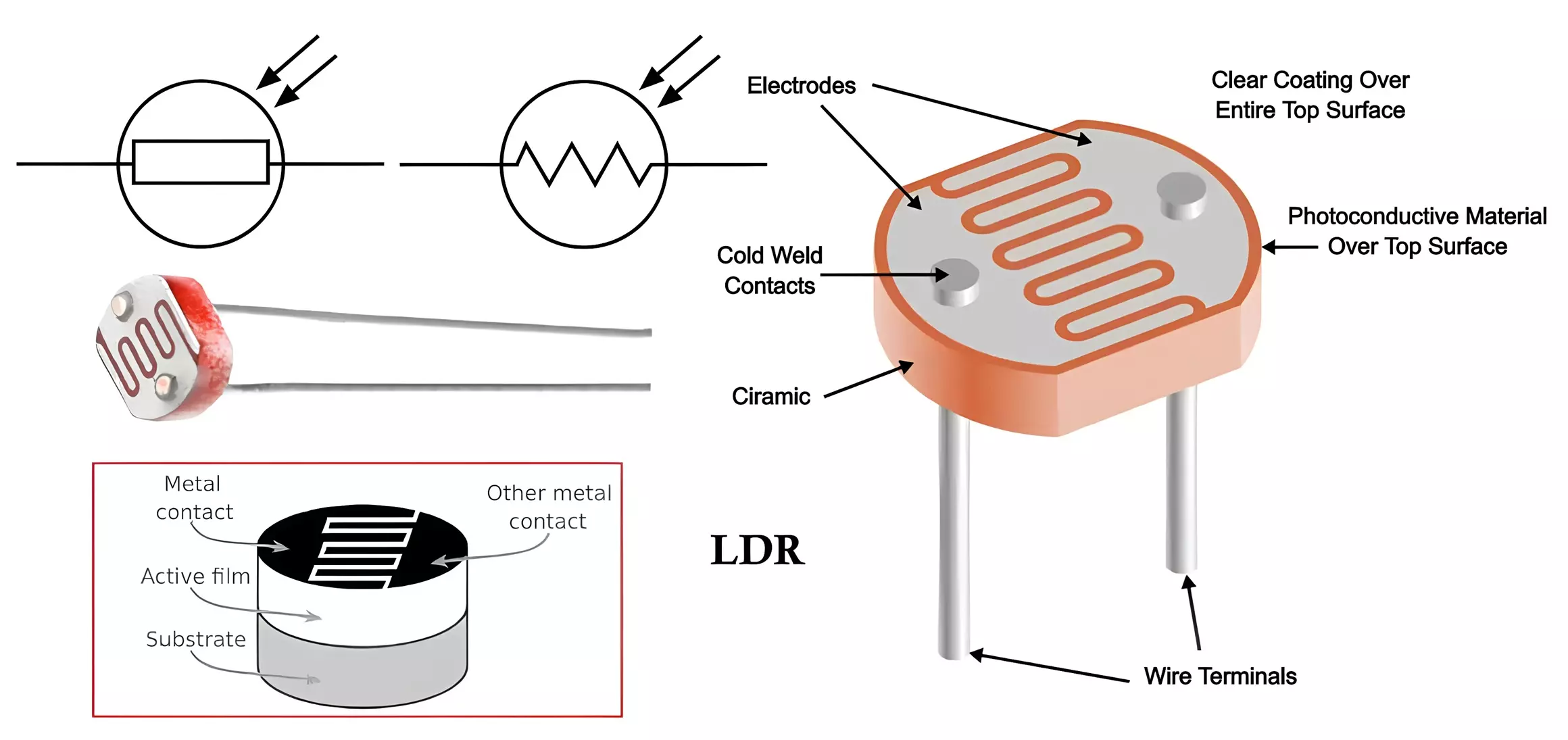
An LDR is typically made from a semiconductor material such as cadmium sulfide (CdS), cadmium selenide (CdSe), or lead sulfide (PbS). The construction of an LDR involves the following steps:
- Substrate Preparation: A ceramic or glass substrate is prepared to serve as the base for the LDR.
- Deposition of Semiconductor Material: A thin layer of the semiconductor material is deposited onto the substrate. This layer is usually in the form of a thin film.
- Electrode Placement: Two electrodes are placed on either end of the semiconductor layer. These electrodes are typically made of metal and are used to connect the LDR to an external circuit.
- Encapsulation: The entire assembly is encapsulated in a transparent or semi-transparent material to protect it from environmental factors while allowing light to pass through.
The semiconductor material used in LDRs has a high resistance in the dark and a low resistance when exposed to light. This property is exploited in various light-sensing applications.
Working of LDR / Photoresistor
The working principle of an LDR is based on the photoconductivity of the semiconductor material. Photoconductivity is the phenomenon where the electrical conductivity of a material increases when it is exposed to light. Here’s how it works:
- In the Dark: When no light falls on the LDR, the semiconductor material has very few free charge carriers (electrons and holes). As a result, the resistance of the LDR is very high, typically in the range of several megaohms (MΩ).
- Under Illumination: When light falls on the LDR, photons from the light are absorbed by the semiconductor material. These photons provide enough energy to the electrons in the valence band to jump to the conduction band, creating electron-hole pairs. This increases the number of free charge carriers, thereby reducing the resistance of the LDR. The resistance can drop to a few hundred ohms (Ω) under bright light conditions.
The change in resistance is proportional to the intensity of light falling on the LDR. This property makes LDRs useful in light-sensing applications.
Characteristics of Light Dependent Resistor (LDR)
LDRs exhibit several key characteristics that make them suitable for various applications:
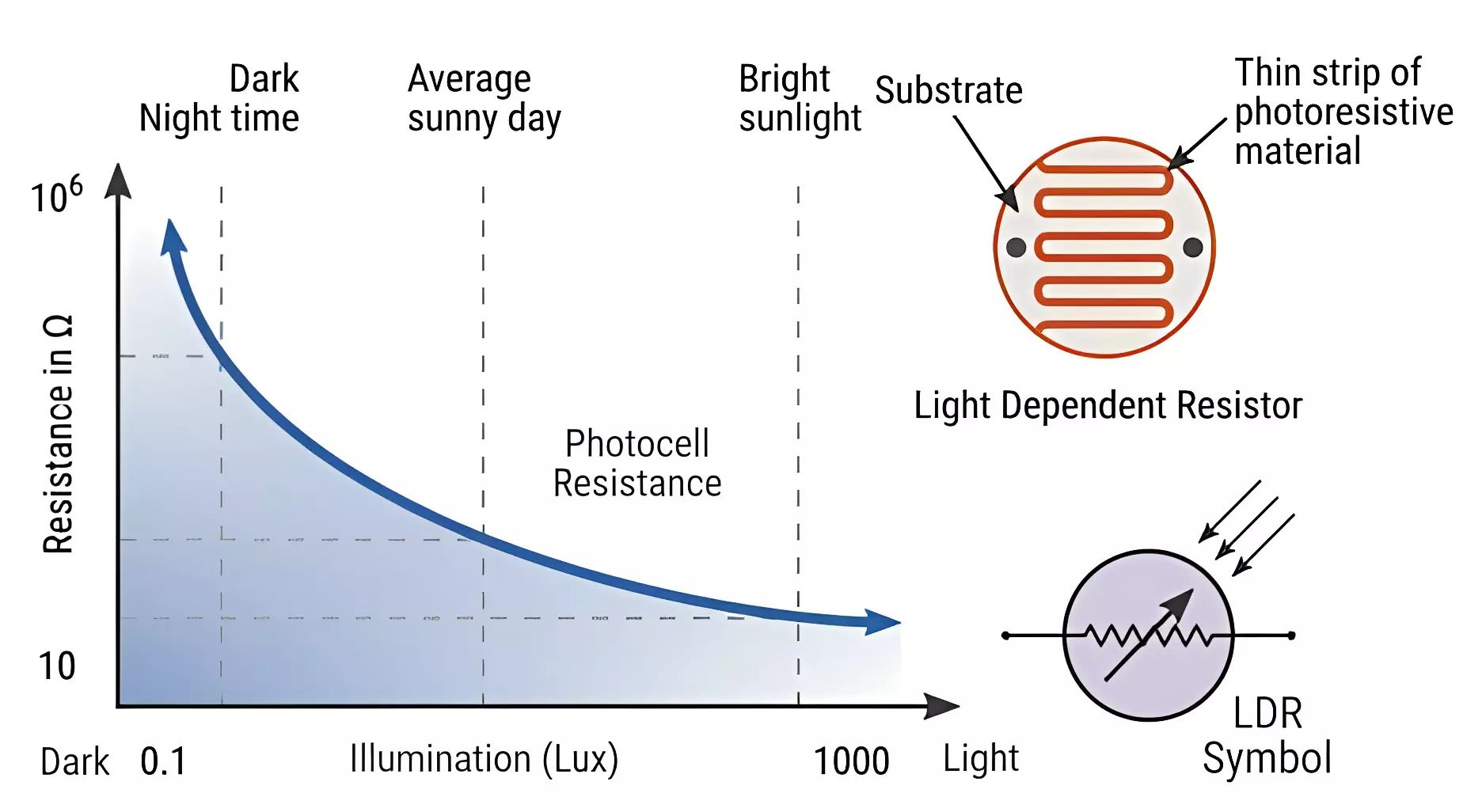
1. Resistance vs Light Intensity
- In Darkness: High resistance (in the range of MΩ).
- In Bright Light: Low resistance (in the range of kΩ or even hundreds of Ω).
- The resistance decreases as light intensity increases.
2. Spectral Response
- LDRs are sensitive to visible and near-infrared light.
- The peak sensitivity depends on the material:
- Cadmium Sulfide (CdS): Peak around 500-600 nm (visible light).
- Lead Sulfide (PbS): Peak around 1,500-3,000 nm (infrared).
3. Response Time
The response time of an LDR is the time it takes for the resistance to change when exposed to light. LDRs typically have a slow response time, ranging from milliseconds to seconds, depending on the material and construction.
-
- Rise Time (Dark to Light): A few milliseconds to seconds.
- Decay Time (Light to Dark): A few seconds to minutes.
4. Temperature Dependence
The resistance of an LDR is also affected by temperature. Most LDRs have a negative temperature coefficient, meaning their resistance decreases with an increase in temperature. It can cause small errors in light measurement.
5. Sensitivity to Wavelength
- The sensitivity of an LDR is a measure of how much its resistance changes with light intensity.
- High-sensitivity LDRs exhibit a large change in resistance for a small change in light intensity.
- Most LDRs are more sensitive to yellow-green light (~550 nm), which is close to peak human eye sensitivity.
6. Hysteresis Effect
- LDRs do not return to their original resistance instantly after the light is removed.
Types of Photoresistors / Light Dependent Resistors
Here are the main types of photoresistors based on their material composition:
1. Intrinsic Photoresistors
- Made from pure semiconductor materials like silicon (Si) or germanium (Ge).
- Operate based on the intrinsic photoelectric effect, where light energy excites electrons from the valence band to the conduction band.
- Typically, sensitive to a broad range of wavelengths, including visible and near-infrared light.
2. Extrinsic Photoresistors
- Made by doping semiconductor materials with impurities to alter their electrical properties.
- Designed to be sensitive to specific wavelengths of light, such as infrared (IR) or ultraviolet (UV).
- Commonly used in specialized applications like IR detectors or UV sensors.
Advantages of LDR / Photoresistor
LDRs offer several advantages that make them popular in light-sensing applications:
- Low Cost: LDRs are inexpensive to manufacture, making them a cost-effective solution for light detection.
- Simple to Use: LDRs are easy to integrate into electronic circuits and do not require complex driving circuitry.
- High Sensitivity: LDRs are highly sensitive to light, making them suitable for applications where precise light detection is required.
- Wide Resistance Range: The wide range of resistance values allows LDRs to be used in various applications, from low-light to bright-light conditions.
- Durability: LDRs are robust and can withstand harsh environmental conditions, making them suitable for outdoor applications.
Disadvantages of LDR / Photoresistor
Despite their advantages, LDRs have some limitations:
- Slow Response Time: LDRs have a relatively slow response time, which makes them unsuitable for applications requiring fast detection of light changes.
- Temperature Sensitivity: The resistance of LDRs is affected by temperature, which can lead to inaccuracies in light detection if not compensated for.
- Limited Spectral Response: LDRs are sensitive to a specific range of light wavelengths, which may not cover the entire spectrum required for some applications.
- Aging: Over time, the performance of LDRs can degrade due to aging, especially when exposed to high levels of light for extended periods.
Applications of Light Dependent Resistor (LDR)
LDRs are used in a wide range of applications, including:
- Automatic Street Lights: LDRs are used in automatic street lighting systems to turn the lights on at dusk and off at dawn.
- Camera Light Meters: LDRs are used in cameras to measure the light intensity and adjust the exposure settings accordingly.
- Burglar Alarm Systems: LDRs are used in burglar alarms to detect changes in light levels, such as when a door or window is opened.
- Solar Trackers: LDRs are used in solar tracking systems to align solar panels with the sun for maximum energy efficiency.
- Light Intensity Measurement: LDRs are used in light meters to measure the intensity of light in various environments, such as photography studios or outdoor settings.
Simple LDR Circuit to Detect Light
A simple LDR circuit can be built to detect light and trigger an action, such as turning on an LED when it gets dark. Here’s a step-by-step explanation of how to build and understand this circuit:
Components Required
- LDR: The light-sensitive resistor.
- Resistor: A variable resistor (100kΩ) to form a voltage divider with the LDR.
- Transistor: An NPN transistor (BC547) to act as a switch.
- LED: A light-emitting diode to indicate the presence of light.
- Power Supply: A DC power source (12V battery).
- Breadboard and Connecting Wires: For assembling the circuit.
Circuit Diagram
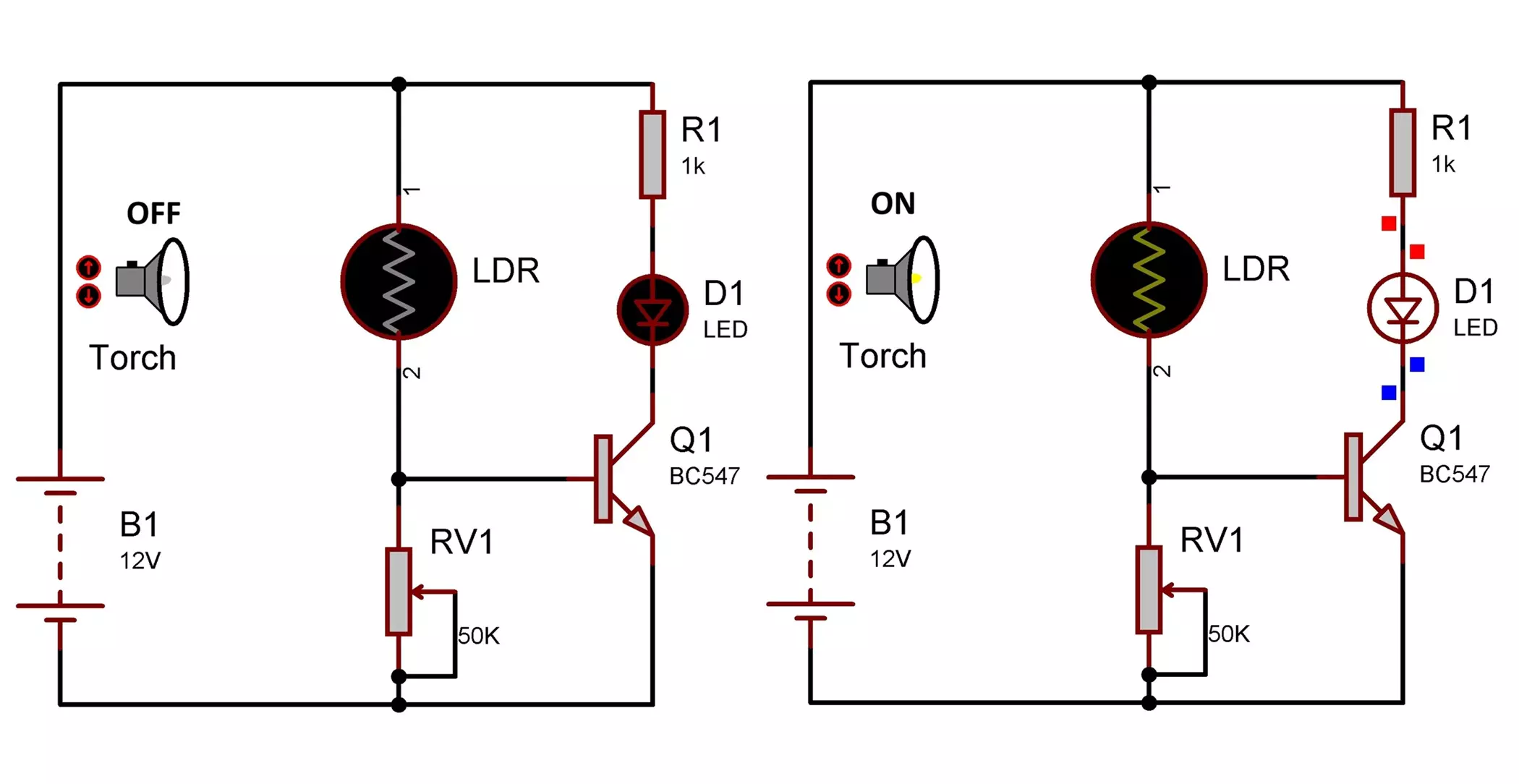
Circuit Explanation
- Voltage Divider: The LDR and the variable resistor (RV1) form a voltage divider. The voltage at the junction between the LDR and RV1 depends on the light intensity. In the dark, the LDR has a high resistance, so the voltage at the junction is low. In bright light, the LDR’s resistance decreases, and the voltage at the junction increases.
- Transistor Switch: The NPN transistor (Q1) acts as a switch. When the voltage at the base of the transistor (connected to the junction of the LDR and RV1) is high enough (in bright light), the transistor turns on, allowing current to flow through the LED and resistor R1, turning the LED on. In the dark, the voltage at the base is low, and the transistor remains off, keeping the LED off.
- LED Indicator: The LED serves as an indicator. When the transistor is on, the LED lights up, indicating that the light intensity is high. When the transistor is off, the LED remains off, indicating low light intensity.
- In Bright Light: The resistance of the LDR is low, so the voltage at the base of the transistor is high. This turns the transistor on, allowing current to flow through the LED, which lights up.
- In the Dark: The resistance of the LDR is high, so the voltage at the base of the transistor is low. This keeps the transistor off, and the LED remains off.
Practical Considerations
- Choosing RV1: The value of RV1 should be chosen based on the resistance range of the LDR and the desired sensitivity of the circuit. A 10 kΩ resistor is a common choice for many LDRs.
- Transistor Selection: The transistor should be selected based on the current requirements of the LED. A general-purpose NPN transistor like BC547 is suitable for most low-power applications.
- Power Supply: The power supply voltage should be compatible with the components used in the circuit. A 12V battery is a common choice for simple circuits.
Conclusion
Light Dependent Resistor (LDR) is a versatile and cost-effective component that play a crucial role in light-sensing applications. Their ability to change resistance based on light intensity makes them ideal for use in automatic lighting systems, camera light meters, burglar alarms, and more. While they have some limitations, such as slow response time and temperature sensitivity, their advantages often outweigh these drawbacks, making them a popular choice for many electronic designs.
By understanding the construction, working principle, and characteristics of LDRs, you can effectively incorporate them into your electronic projects. The simple LDR circuit described in this article is a great starting point for experimenting with light detection and can be expanded upon for more complex applications. Whether you’re a hobbyist or a professional, LDRs offer a simple yet powerful way to interact with the environment through light.